Best Traditional Finnish Home Sauna UK 2026
Traditional Finnish home sauna buying guide for the UK: electric vs wood-burning heaters, kW sizing, the best brands, running costs and what to check.
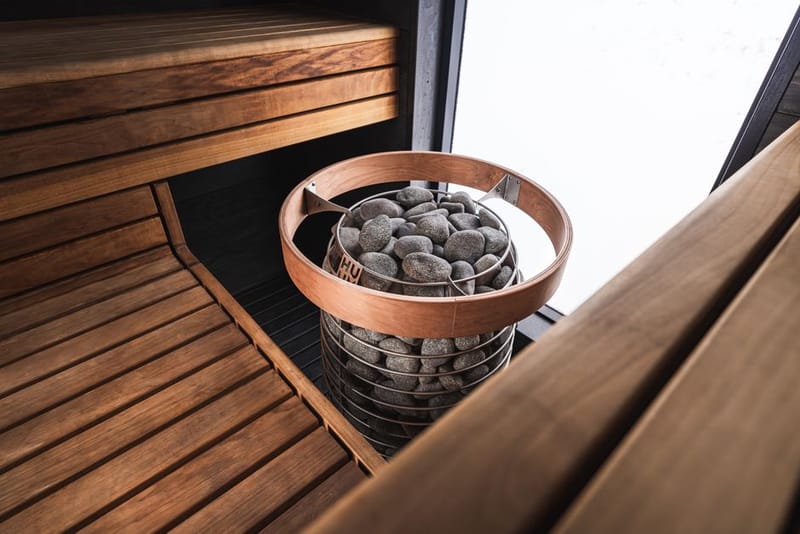
A traditional Finnish sauna is the heater-led, stone-topped, steam-and-löyly experience that infrared and portable units can't replicate. Buying one for a UK home comes down to three decisions: electric or wood-burning heat, the right heater output for your room, and a kit cabin or a bespoke build. This guide settles all three with current UK prices, the brands worth your money, and the wiring you'll actually need.
What makes a sauna 'traditional Finnish'?
A traditional Finnish sauna heats the air, not just your body. A high-output stove (electric or wood-burning) heats a deep bed of stones to 70-80°C or more, and you ladle water onto those stones to create löyly (the burst of humid steam that is the signature of the Finnish sauna). That steam, and the high air temperature behind it, is exactly what an infrared cabin cannot produce. For the cultural and technical background, see the overview of the sauna on Wikipedia.
This matters for your buying decision. If you want the authentic ritual, sociability and the option of a proper steam, you want a traditional heater sauna. If you want a gentle, low-temperature sweat in a small footprint, our portable sauna guide and the wider home sauna buying guide cover the alternatives.
Electric or wood-burning heater?
| Electric heater | Wood-burning heater | |
|---|---|---|
| Heat-up time | 30-45 minutes | 60-90 minutes |
| Temperature | 70-80°C, precise control | Softer heat, holds 3-4 hours+ |
| Stone capacity | 20-40kg | 80-120kg |
| UK regulations | Part P wiring, 16A or 32A circuit | Part J flue, clearances, no power |
| Best for | Indoor, urban gardens, convenience | Off-grid, rural plots, the full ritual |
Electric is the right answer for the large majority of UK homes. It heats fast, holds a precise temperature, needs no flue, and produces no smoke that might trouble close neighbours. Many models add Wi-Fi app control so the sauna is hot when you get home. The trade-off is that you need an electrician to fit a dedicated circuit.
Wood-burning rewards you with a softer, longer heat and total independence from the grid, thanks to a much larger stone bed (80-120kg against an electric heater's 20-40kg). But it is slower to heat, needs a compliant flue, and is realistically an outdoor, rural-plot choice. Crucially, the two heat types fall under different UK rules: electric work must meet Building Regulations Part P, while a wood-burner must meet Part J for combustion appliances and flues.
What size heater do you need?
Heater output is matched to cabin volume, measured in kW per cubic metre. Common UK domestic sizes are 4.5kW, 6kW, 6.8kW, 8kW and 9kW. As a rough rule, a 4.5kW heater suits a compact two-person cabin and can run on a 16A circuit; 6kW and above needs a dedicated 32A (or 40A) circuit installed by a qualified electrician. That electrical work must comply with Building Regulations Approved Document P.
Get the sizing right and the sauna reaches temperature quickly and holds it; undersize the heater and it never quite gets there. Our dedicated sauna heater sizing guide works through the kW-per-cubic-metre maths for every common room size.
Which heater brands are worth buying?
The heaters worth your money are Finnish. For electric, the established names sold in the UK are Harvia (the largest Finnish manufacturer, with the widest model range), Tylö, Helo, HUUM (known for minimalist Nordic design and app control), Narvi and IKI (whose stainless mesh build maximises stone exposure for a softer steam). Harvia electric heaters sold in the UK run roughly £306 to £929 inc VAT depending on output and controls. For wood-burning, look at Narvi, IKI, Kastor and Tulikivi.
All reputable electric heaters sold here carry CE and UKCA certification. Avoid unbranded heaters with no certification or UK support: the heater is the one component you cannot afford to cut corners on.
Kit cabin or bespoke build?
A prefab kit cabin from a brand like Harvia or Tylö ships flat-packed in standard sizes and assembles quickly, which keeps cost and labour predictable. A bespoke build lets you fit an awkward space or match your interior, but costs more and needs a competent carpenter. Either way, the cladding to look for is thermowood (heat-treated Nordic spruce or pine, kiln-treated at 180-215°C for dimensional stability and rot resistance).
Whichever route you take, budget for the surrounding work, not just the cabin: a base or pad, the electrical circuit, and ventilation. Our guides to sauna wood types and total installation cost break down what each element adds.
How much does a traditional sauna cost to run?
Less than most people expect. A 6.8kW electric sauna uses roughly 5 kWh per session, which is about £1.40 at 28p per kWh. The bigger one-off cost is the electrical install: budget around £250-£450 for a 16A circuit or £400-£900 for a 32A circuit, plus the heater and cabin themselves.
Ongoing maintenance is light: replace the sauna stones every 18-36 months as they degrade with repeated heating and cooling, and keep the cabin clean and ventilated. Our running-cost breakdown models different heater sizes and tariffs.
Is a traditional sauna right for your home?
Buy a traditional Finnish sauna if you want the authentic high-heat, steam-and-löyly experience, you have the space for a cabin, and you can accommodate a dedicated electrical circuit (or an outdoor flue for wood). It is the most rewarding format and the one serious sauna users settle on.
Look elsewhere if space or budget is tight, you rent, or you mainly want a gentle low-temperature sweat. In those cases an infrared cabin or a portable unit makes more sense. If you are choosing the cabin shape, our barrel vs cabin comparison and best indoor home saunas help you decide.
What to check before you buy
Confirm heater output against room volume
Match kW to cubic metres. A 4.5kW heater suits a small two-person cabin; 6-8kW covers most family-size rooms.
Check the electrical circuit you can supply
4.5kW runs on 16A; 6kW and above needs a dedicated 32A circuit and a qualified electrician working to Part P.
Choose electric or wood for your setting
Electric for indoor and urban gardens; wood-burning only for off-grid or rural plots where a flue and clearances are feasible under Part J.
Buy a certified Finnish heater
Harvia, Tylö, Helo, HUUM, Narvi or IKI for electric, with CE and UKCA marks and UK support. The heater is not the place to save money.
Specify thermowood cladding
Heat-treated Nordic spruce or pine resists warping and rot in the heat-and-humidity cycle better than untreated timber.
Frequently asked questions
What is the best traditional Finnish sauna for a UK home?
Is an electric or wood-burning sauna heater better?
What size sauna heater do I need?
How much does a traditional sauna cost to run?
Do I need planning permission for a home sauna?
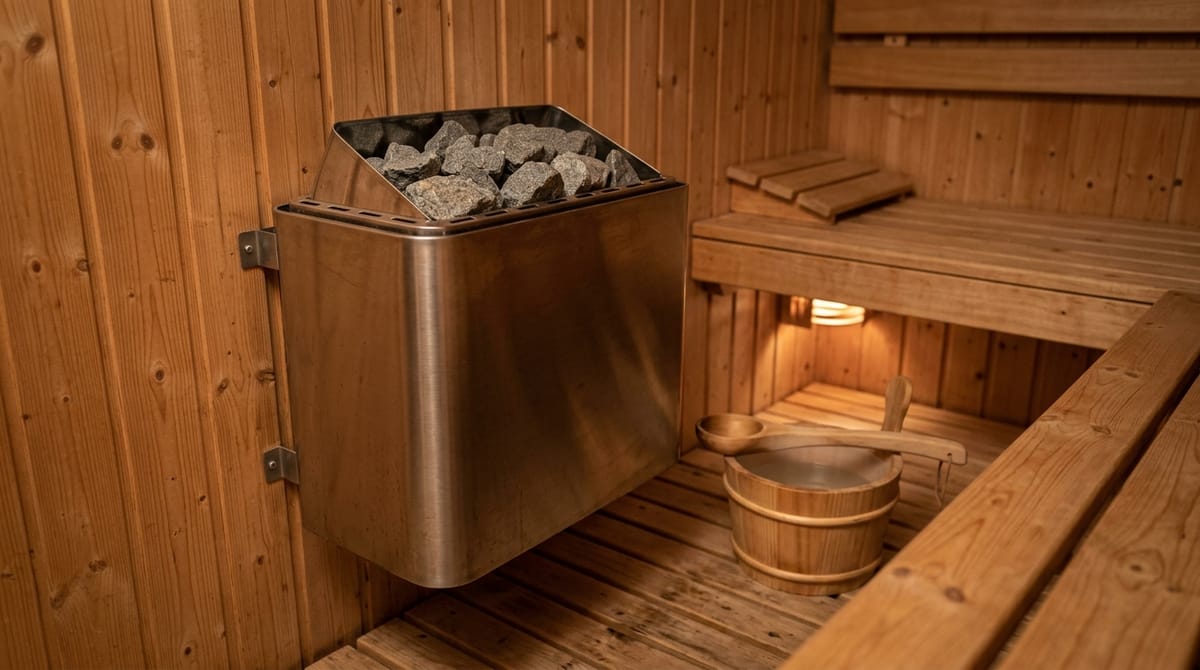
Sauna Heater Sizing Guide UK 2026
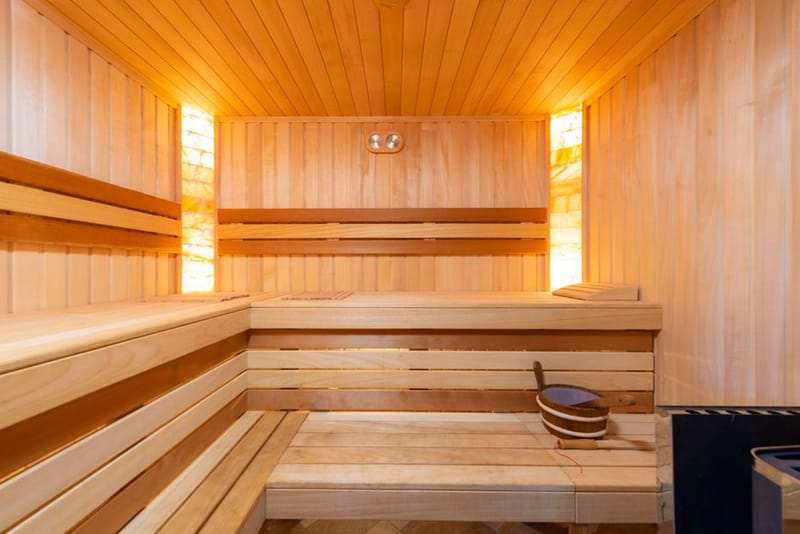
Sauna Wood Types Compared UK 2026
Sauna Installation Cost UK 2026
Home Sauna Buying Guide UK 2026
Ready to size your sauna?
Get the heater output right before you spend on a cabin.