Sauna Electricity Cost Per Session UK 2026
What a home sauna actually costs to run: kWh per session by heater size, tariff impact (off-peak vs standard), monthly + annual cost projections.
If you're budgeting the running cost of a home sauna, the per-session electricity bill is the line item that ends up being asked about most. This guide breaks the maths down by heater size, session length, and electricity tariff - with realistic monthly + annual projections at typical UK use patterns.
The per-session formula
Three variables: heater kW, session minutes, tariff rate.
Per-session electricity cost = average kW draw × session hours × cost per kWh.
The 'average kW draw' is the tricky number. During warm-up (first 10-20 minutes) the heater runs at near-100% rated output. Once the cabin reaches target temperature, the thermostat cycles the heater - on for ~3-5 minutes, off for ~3-5 minutes, depending on insulation + setpoint. Across a typical 30-minute session including warm-up, the average draw works out to roughly 50-70% of the heater's rated kW.
So a 6 kW heater × 0.5 hours × 0.6 (average duty cycle) = ~1.8 kWh per session. Round to 2 kWh for a typical setup; allow 3 kWh for a longer session or colder starting cabin.
Cost per session by heater + tariff
Realistic numbers for the common UK setups.
| 6 kW heater / 30-min session | 6 kW heater / 60-min session | 9 kW heater / 30-min session | 9 kW heater / 60-min session | 13 kW outdoor heater / 45-min session | |
|---|---|---|---|---|---|
| kWh used | ~2 kWh | ~3.5 kWh | ~3 kWh | ~5 kWh | ~6 kWh (longer warm-up, more heat loss) |
| Off-peak (7.5p) | GBP 0.15 | GBP 0.26 | GBP 0.23 | GBP 0.38 | GBP 0.45 |
| Standard (27p) | GBP 0.54 | GBP 0.95 | GBP 0.81 | GBP 1.35 | GBP 1.62 |
| Annual @ 3/week | GBP 23 (off-peak) / GBP 84 (standard) | GBP 41 (off-peak) / GBP 148 (standard) | GBP 35 (off-peak) / GBP 126 (standard) | GBP 59 (off-peak) / GBP 210 (standard) | GBP 70 (off-peak) / GBP 253 (standard) |
| Annual @ daily | GBP 55 (off-peak) / GBP 200 (standard) | GBP 95 (off-peak) / GBP 345 (standard) | GBP 83 (off-peak) / GBP 295 (standard) | GBP 137 (off-peak) / GBP 493 (standard) | GBP 164 (off-peak) / GBP 591 (standard) |
Why the off-peak tariff matters so much
A single tariff switch is the biggest cost lever you have.
The off-peak vs standard electricity rate gap is the most consequential cost variable for a regular sauna user. UK off-peak EV tariffs in 2026:
- Intelligent Octopus Go: ~7p/kWh in a 6-hour overnight window (00:30-05:30 nominally; can extend dynamically).
- EDF GoElectric 35: ~8p/kWh in a 5-hour off-peak window.
- Octopus Go classic: ~8.5p/kWh in a fixed 5-hour overnight window.
If you're a sauna user already on an off-peak EV tariff (because you have an EV), scheduling sauna sessions during the off-peak window gives you the cheapest possible run cost - typically 3-4x cheaper than the same session on standard rates.
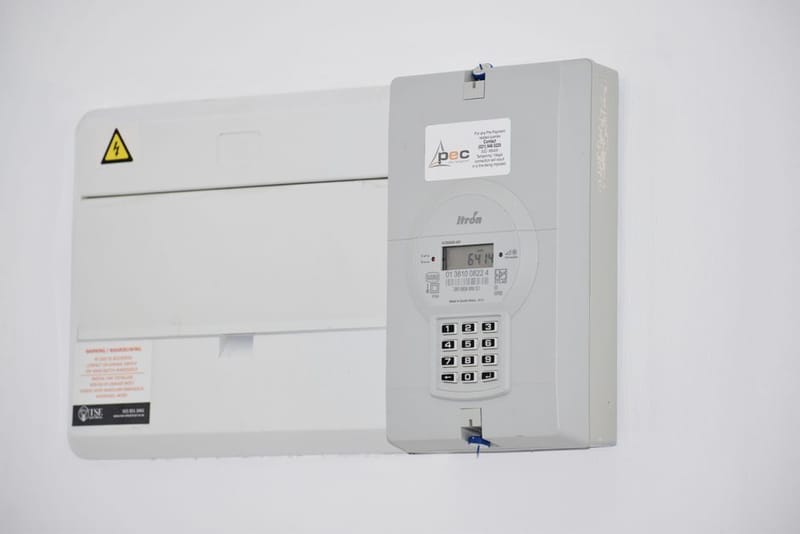
If you don't have an EV but use the sauna regularly, switching to a dual-rate tariff specifically for sauna use can pay for itself within the first 100-150 sessions, even accounting for the slightly higher peak rate on these tariffs. See our smart meter upgrade guide for the prerequisite (SMETS2 meter + half-hourly settlement) before switching.
Three things that inflate the cost
Variables that push real run costs above the simple formula.
1. Cold-start sessions. A sauna left to cool for days takes longer to warm up than one used 2-3x a week. Warm-up from 5°C ambient to 80°C takes ~50% more kWh than warm-up from a 20°C ambient. The fix: regular use, or pre-heat from a programmable timer 30 min before you plan to use it (counter-intuitive but cheaper than waking the heater fully cold).
2. Outdoor cabins in winter. A garden sauna in January loses heat to outside air much faster than an indoor cabin. Expect 25-40% higher per-session kWh in winter months vs summer for the same setup.
3. Glass walls + thin insulation. Sauna packages with full-glass fronts or premium aesthetics often have thinner cabin walls + larger heat-loss surfaces. Operating cost can be 20-30% higher than equivalent-sized solid-wood cabins.
Annual budget by use pattern
What real sauna users pay over a year.
Three realistic annual scenarios (UK 6 kW indoor cabin, mid-2026 tariff rates):
- Light user (1-2 sessions/week, 30 min): ~100 sessions/year × 2 kWh × 27p = GBP 54 standard rate, GBP 15 off-peak. Less than running a freezer for a year.
- Regular user (3-4 sessions/week, 30 min): ~180 sessions/year × 2 kWh × 27p = GBP 97 standard rate, GBP 27 off-peak. Comparable to monthly running cost of a fridge-freezer.
- Heavy user (daily, 45-60 min): ~365 sessions/year × 3.5 kWh × 27p = GBP 345 standard rate, GBP 96 off-peak. Equivalent monthly electricity of a tumble dryer used 3-4x/week.
For most home-sauna owners, the running cost is meaningfully lower than the upfront capital cost amortised over the cabin's lifespan (15+ years for cedar; 10+ for hemlock). The maintenance + running cost is usually 5-15% of the annual amortised cabin cost.