Home Sauna Buying Guide UK 2026: What Actually Matters
Infrared vs traditional, barrel vs cabin, UK planning law, electrical requirements, brands and running costs - the 7-decision buying guide.
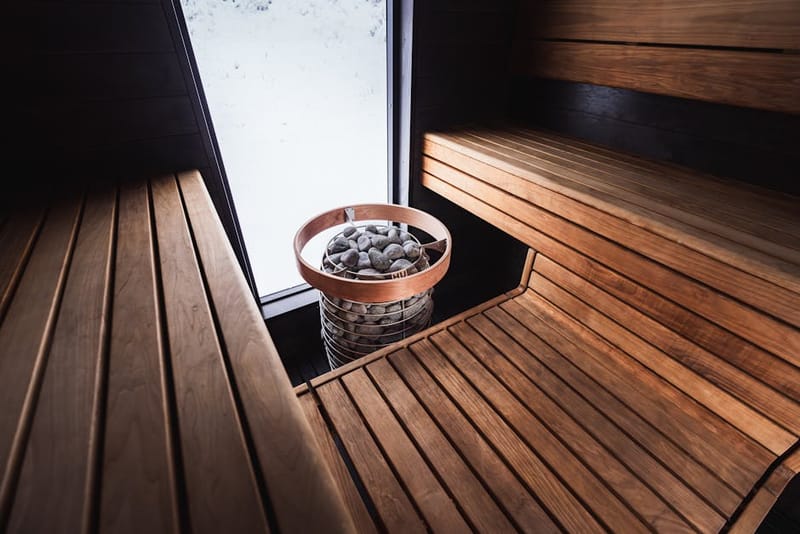
A home sauna is a £1,500-to-£12,000 commitment to a small wooden room that lives in your garden, garage or spare bathroom for the next 10-15 years. Getting the decision right means understanding several things the marketing collapses together: infrared and traditional saunas are physiologically distinct products, UK planning law treats sauna outbuildings under permitted-development rules with specific size limits, and the electrical requirements step up sharply once you cross from "portable infrared" to "real Finnish-style heater." This guide walks through those decisions in order, names the UK-shippable brands worth shortlisting at three budget tiers, and ends with running-cost estimates so the maths is honest before you commit.
If you are still deciding whether you want a sauna at all rather than a paid session at a venue, our wild sauna UK pillar covers the venue side of the question.
Which type should your first sauna be?
Before the seven decisions below, most first-time buyers want one clear steer: which of the three sauna types to start with. Traditional saunas deliver löyly (the burst of steam you get throwing water on hot stones); infrared cabins warm your body directly with radiant panels and never produce steam. This quick flow gets you to the right category before you spend an evening comparing models.
If your budget is tight or you have no garden, an infrared cabin under £1,500 is the realistic entry. If you want the authentic ritual and have outdoor space, a budget outdoor sauna under £3,000 or a barrel sauna is where most buyers land.
Start with budget and space
Under £1,500, or in a flat or rental with no garden? An infrared cabin is the realistic entry point – plug-in, low-wattage, no electrician. Have outdoor space and £2,000 or more? A traditional barrel or cabin is in reach.
Decide infrared or traditional
Want the löyly ritual, high heat (80–90°C) and the social Finnish experience? Choose traditional. Prioritise the lowest running cost, a gentler 50–60°C warmth and the simplest install? Choose infrared.
If traditional, pick the heat source
Mains power available and you want fast, hands-off heat-up in 20–40 minutes? Electric. No electrician budget, or you want the crackle and smoke? Wood-fired – it skips the Part P wiring job entirely, the single biggest saving lever, in exchange for a slower one-to-two-hour heat-up and a flue.
Match the size to your household
Solo use or a couple? A 2-person cabin keeps purchase and running costs down. Family or regular guests? Size up to a 4-person model and a 6–8 kW heater so it is not cramped and slow.
1. Traditional or infrared - are they really the same thing?
The single most consequential decision is which category of sauna you buy. The marketing language often blurs the two together; the underlying physics and clinical evidence are distinct.
Traditional Finnish sauna
A traditional sauna heats the air to 80-110°C - most published research on Finnish home installations centres on around 85°C with controlled humidity, as documented in a 2009 PubMed Central evidence review. Heat reaches the body through hot air and radiant heat from the stones, with steam (löyly) added by pouring water onto the heated rocks. This is the type of sauna behind almost all the long-term cardiovascular cohort evidence - the Kuopio Ischaemic Heart Disease (KIHD) study population used home electric saunas at these temperatures multiple times per week, and the 70%-lower-fatal-CVD-risk finding at 4-7 sessions per week comes from that cohort. If you buy a sauna and your strongest motivation is the published health-benefit evidence base, this is the category to buy.
Infrared (far-infrared) sauna
An infrared sauna heats the body directly via ceramic or carbon-fibre panels emitting far-infrared wavelengths. The same PubMed Central review notes that far-infrared saunas (FIRS) "heat to approximately 60°C" - meaningfully cooler than a traditional sauna's air temperature - and that infrared "penetrates more deeply than warmed air," producing "a more vigorous sweat at a lower temperature." The cardiovascular load is "similar to that achieved by walking at a moderate pace."
The evidence base for FIRS is real but narrower than the marketing implies. The 2009 review identifies four published studies supporting FIRS efficacy for congestive heart failure treatment, but also notes "consistent fair evidence to refute claims regarding the role of FIRSs in cholesterol reduction." Most large long-term sauna cohort findings come from traditional-sauna populations and do not transfer to infrared without qualification.
The honest framing
Buy infrared if: you cannot tolerate the high temperatures of a traditional sauna; you want plug-in-able portability; you have limited electrical capacity; the milder heat suits a sensitive cardiovascular or autonomic condition under medical advice.
Buy traditional if: you want the published-evidence health-outcome base; you want the social and ritual qualities of higher heat with löyly; you have or can install the electrical capacity (32 A typical); you prefer a longer-lasting build (electric heater elements + rocks vs panel arrays).
Avoid: any vendor that conflates the two categories' evidence ("the cardiovascular research" - most of it is traditional-sauna research) or implies infrared is a "better" or "more modern" version of traditional. They are different products doing different things.
2. Barrel vs cabin vs panel - the structural choice
Within the traditional category, the next decision is the physical form factor. Three dominant UK options:
- Barrel sauna. Cylindrical outdoor design - the most cost-effective dedicated outdoor option. Smaller footprint than a cabin for the same internal capacity, simpler structurally (no rectangular corners to seal), and the curved roof sheds rain well. Trade-offs: the bench layout is constrained (back-to-back along the long axis), and the door positioning is fixed.
- Cabin sauna. Rectangular outdoor structure, typically with a vestibule changing area, optionally with a porch or window wall. More flexible internal layout, room for two-tier benching, and the obvious choice for groups of 4+. More expensive than the equivalent barrel and slightly more complex to install.
- Indoor panel kit. A flat-pack interior kit that fits inside an existing room - a spare bathroom, basement, garage corner, or large utility space. Tongue-and-groove cedar or spruce panels with a pre-fitted heater. Sub-£3,000 entry point. Trade-offs: requires a suitable host space (typically 2.5m floor-to-ceiling minimum), ventilation routing, and reliable waterproofing to the building's interior.
- Pod / capsule sauna. A relatively recent category - a one-or-two-person freestanding unit that ships fully assembled. Easier installation, smaller footprint, but limited to single-bench seating and typically infrared rather than traditional.
For most UK gardens, the barrel is the most efficient buy below the £5,000 mark and the cabin makes sense above it. For most UK indoor installations, the panel kit is the default unless space dictates otherwise.
3. UK planning permission and permitted development
The UK planning system treats sauna outbuildings as "outbuildings" - the same category as garden sheds, summer houses and garden offices. The Planning Portal's outbuildings page is the authoritative source; the key constraints that apply to most home sauna installations are:
- Single storey with a maximum eaves height of 2.5 metres and an overall height of 4 metres with a dual-pitched roof (3 metres for any other roof shape).
- Buildings within 2 metres of a curtilage boundary have a maximum height of 2.5 metres. This is the constraint that catches most close-to-fence installations. A barrel sauna at 2.4 m total height fits; a cabin with a 2.7 m apex placed 1 m from a fence does not.
- No outbuilding is permitted on land forward of a wall forming the principal elevation - front gardens are out. The sauna goes in the back or side garden.
- No more than half the area around the original house can be covered by outbuildings and additions combined. Most installations are well within this; small terraced gardens with an existing extension are the edge case to check.
- In National Parks, Areas of Outstanding Natural Beauty (AONBs) and Conservation Areas, buildings more than 20 metres from the house are limited to 10 m². A 4 m × 3 m cabin sauna at the bottom of a long garden in an AONB needs full planning permission.
- Listed buildings always require planning permission for any outbuilding in the curtilage - no permitted-development scope.
What this means in practice: the typical 2.4 m-tall barrel or compact cabin sauna in a suburban back garden, set 1.5-2 m from the boundary fence, fits inside permitted development and does not need a formal planning application. Three categories of buyer should always check explicitly with the local planning authority before committing: anyone in a listed property, anyone in an AONB or Conservation Area, and anyone whose installation would be more than 3 m tall or larger than 10 m² near a boundary.
Note: permitted development does not exempt the sauna from Building Regulations. Even if no planning application is needed, the electrical installation, structural safety and (for outdoor installations) drainage all still need to satisfy the Building Regulations. The most consequential of these is electrical - see Section 4.
4. Electrical requirements - 13 A plug-in vs hardwired
Electrical capacity is the second-most-frequent reason a planned home sauna purchase falls through, after planning. The headline numbers:
- Small portable infrared saunas (1-2 person, low-wattage). Draw 13-15 A, run on a standard UK 13 A 3-pin socket. No electrical upgrade required. This is the entry-level infrared category and the simplest installation path.
- Larger infrared saunas (3-4 person, higher-wattage panels). Draw 20-32 A. Typically need a dedicated 32 A circuit on a separate consumer-unit way.
- Traditional electric sauna with a 4.5-6 kW heater (suitable for ~2-4 person rooms). Needs a dedicated 30 A circuit, hardwired, on a double-pole breaker on the consumer unit.
- Larger 7.5-9 kW heaters (4-6 person rooms). Need a 40-50 A circuit. This is the point at which the consumer unit's available capacity becomes an issue in older UK houses.
- 10-12+ kW commercial heaters. Three-phase supply territory. Rare in domestic settings.
UK electrical work on a sauna circuit is notifiable under Part P of the Building Regulations and must be done by a Part P-certified electrician. Trying to DIY a 32 A hardwired heater is illegal, dangerous, and will invalidate your home insurance.
Two practical points the brochures rarely mention. First, if the sauna is more than ~9 metres from your consumer unit (a typical garden run), the cable gauge needs to step up to compensate for voltage drop - a £150-£300 increment that needs accounting for in the install budget. Second, the consumer unit itself needs an available way and total capacity headroom; in pre-1990s housing this often forces a consumer-unit upgrade as part of the install, adding £400-£900.
The pragmatic order is: get an electrician quote on the supply before you commit to the sauna purchase. A £4,000 cabin sauna becomes a £5,500 project quickly if a consumer-unit upgrade is in scope.
5. Budget tiers - what you actually get at £1.5k / £3k / £6k+
Pricing as of mid-2026, including the sauna unit only (electrical install and groundworks separate):
£1,500-£3,000 tier - 1-2 person, indoor, mostly infrared
This is the entry point. Buyers in this band typically end up with:
- Small infrared cabins (1-2 person, plug-in, carbon-fibre or ceramic panels).
- Compact indoor panel kits with low-wattage traditional heaters (3-4.5 kW).
- Brands at this tier: budget IR specialists, lower Sentiotec models, smaller Harvia indoor cabins.
- Trade-offs: limited interior space (no two-tier benching), simpler panel finishes, shorter manufacturer warranties (2-3 years).
£3,000-£6,000 tier - 2-4 person, outdoor barrel or cabin, traditional
The mainstream UK home-sauna purchase. At this tier:
- Outdoor barrel saunas (typically 2.4 m × 1.9 m, 2-4 person).
- Mid-size outdoor cabins (2-3 m × 2 m).
- Quality traditional Finnish electric heaters (Harvia, Tylö, Saunum, HUUM, Narvi at 6-8 kW).
- Brands at this tier: Harvia mid-range cabins and Harvia / Tylö heaters; Sauna Wales / The Hot Tub Co / Eden Hut barrel imports; growing UK-assembled options from Sauna Timber and Riggs.
- Trade-offs: 5-7 year manufacturer warranties on heaters, 5-10 year on cabins. Real cedar / Nordic spruce cladding. Two-tier benching standard.
£6,000-£12,000+ tier - 4-6 person, premium, often bespoke
At this tier:
- Larger outdoor cabins (3 m+ length, 4-6 person), often with vestibule changing area and porch.
- Wood-fired heater options (Harvia M3 / Saunum / HUUM stoves) at extra cost - typically £1,000-£2,500 above the equivalent electric.
- Premium Tylö / Saunum installations with integrated control panels, Aufguss capability, advanced air-mixing.
- Bespoke fits - non-rectangular footprints, glazed walls, custom timber.
- Trade-offs: long installation lead times (2-4 months from order), more involved planning paperwork in some local authorities, higher running costs.
Above £12,000 the market is small-volume commercial-spec installations - Aufguss-capable, multi-zone, four-stone heater configurations. Rare in residential settings.
| Entry tier – £1,500–£3,000 | Mainstream tier – £3,000–£6,000 | Premium tier – £6,000–£12,000 | |
|---|---|---|---|
| Typical buy | 1–2 person indoor infrared cabin, or a compact panel kit with a 3–4.5 kW heater | 2–4 person outdoor barrel or cabin, traditional electric or wood-fired | 4–6 person western red cedar barrel or cabin, premium build |
| Heater & power | Plug-in / 13 A – no electrician for most infrared | 4.5–6 kW, usually hardwired (Part P) – or wood-fired to skip it | 8 kW+ electric or wood-fired, two-tier benching |
| Best for | Solo users, flats and rentals, the lowest entry cost | The mainstream UK garden purchase | Daily users and larger households wanting longevity |
| Running cost | ~43p per infrared session at 27p/kWh | ~80p–£1.35 per electric session | ~£1.35–£1.65 per session |
| Watch out for | No two-tier benching, simpler finishes, 2–3 year warranties | Heater often sold separately on cabin kits; add base + electrician | Full garden install (base, electrics, delivery access) can add £1,000–£5,000+ |
6. UK-shippable brands worth shortlisting
The home-sauna market is genuinely global, but only a subset of brands has reliable UK distribution, UK-certified electrics, and warranty support that does not require shipping the heater back to mainland Europe. The shortlist:
- Harvia - Finnish manufacturer, broadest UK distribution by some margin, full product range from £200 heaters to £10,000+ cabins, full IR / electric / wood-fired coverage. The default safe choice. UK distribution via Leisurequip, PoolMarket, Sauna Timber, Steam Rooms UK and several others.
- Tylö / Tylö-Helo - Swedish manufacturer, premium positioning, sold via Leisurequip and similar specialists. Higher entry price than Harvia but well-regarded build quality.
- Saunum - Estonian manufacturer with active UK distribution, known for proprietary air-mixing technology that distributes heat more evenly across the room. Strong on premium installations.
- HUUM - Estonian heater specialist, design-led, premium positioning, gaining UK distribution. Aesthetic-driven choice for a more open interior style.
- Sentiotec - Austrian budget-mid Harvia subsidiary brand. Useful for mid-budget IR cabins and electric heaters.
- Narvi - Finnish heater specialist with niche but real UK distribution.
Brands to avoid as a UK buyer unless you have specific reasons: any US brand (Sun Home, Redwood Outdoors, Almost Heaven) without explicit UK warranty support - the electrical certification typically does not match UK Part P standards and warranty service requires shipping logistics that erode the cost advantage. Cheap unbranded imports via marketplace platforms - often un-CE-marked, no UK warranty, electrical compliance unknown.
Detailed brand-by-brand and product-by-product reviews are being published in our Home Saunas section as we cover them.
7. Running costs - the part the brochures skip
Running costs depend on heater wattage, frequency of use, household electricity tariff and heat-up duration. A reasonable working estimate for the UK in 2026:
- Small infrared (1-2 person, ~1.6 kW total). 60-minute session draws ~1.6 kWh. At 27p/kWh UK average rate, that is ~43p per session.
- Mid-size traditional electric sauna (4.5 kW heater, 90-minute session including heat-up). Heater pulls ~4.5 kW for the first 30-40 minutes (heat-up), then averages ~2.5 kW thermostat-cycled for the remaining 50 minutes. Total ~3 kWh, or roughly 80p per session.
- Larger traditional electric (6-8 kW, 90 minutes). ~5-6 kWh per session, roughly £1.35-£1.65 at the same tariff.
- Wood-fired stove. Logs are cheaper per kWh-equivalent than UK grid electricity (rough industry figures put hardwood at 8-10p per equivalent kWh delivered as heat), and a typical session burns 4-6 kg of seasoned hardwood. But you also need flue installation, chimney cleaning, and log storage. The marginal per-session cost is lower; the total cost of ownership across the year is similar to a 4.5 kW electric.
For a household running 2-3 sessions per week, a mid-size traditional electric sauna costs roughly £8-£20 per month in additional electricity. A premium 6-8 kW installation used heavily can creep to £30-£40/month. Either band is small compared with the £40-£80 per session a wild-sauna venue charges - the home installation pays back the kit cost (£3,000-£6,000) in roughly 100-150 sessions if it replaces venue visits.
Frequently asked questions
Do I need planning permission for a garden sauna in the UK?
Is an infrared sauna as good as a traditional sauna?
Can I plug a sauna into a regular UK 13 A socket?
How much does it cost to run a home sauna in the UK?
How big a sauna do I need?
Can I install the sauna myself?
How long do home saunas last?
Want to try before you buy? Visit a wild sauna first
Visiting two or three wild-sauna venues at different temperatures and styles is the cheapest way to figure out whether a home installation will earn its space.