Best Portable Sauna UK 2026 (Tent & Pop-Up)
Portable sauna buying guide for the UK: infrared blankets, tents and domes compared, with real GBP prices, EMF advice and honest heat expectations.
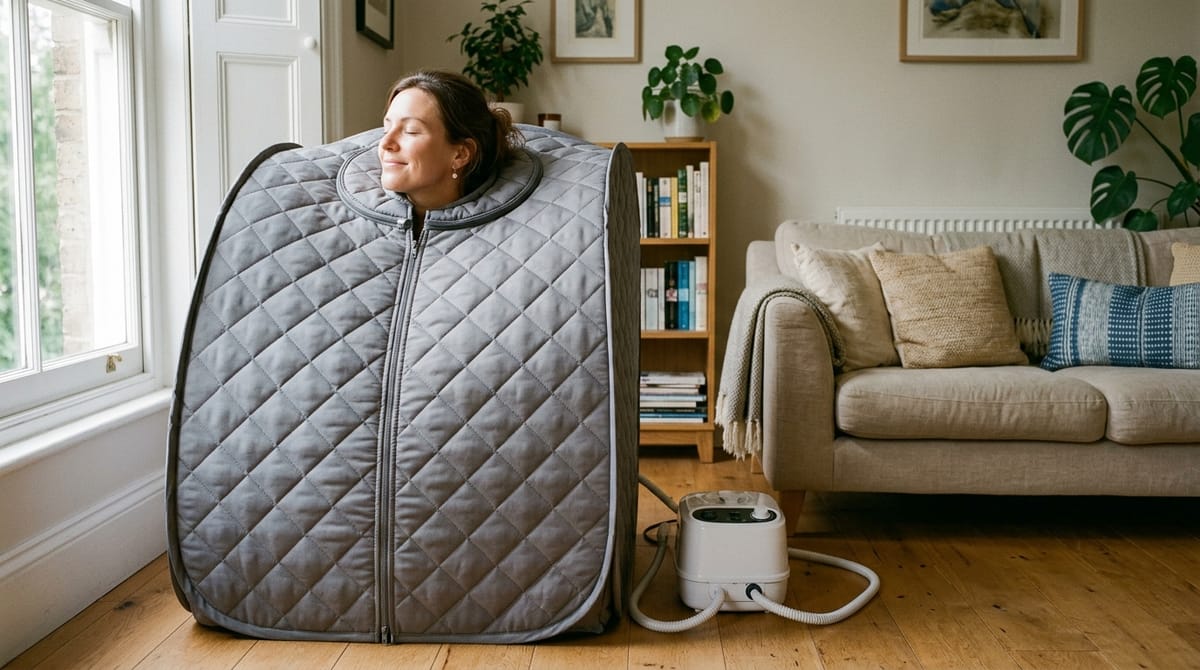
The best portable sauna in the UK is the one that fits the gap a cabin can't: a flat in a city, a spare 30 minutes after the gym, or a budget that stops well short of four figures. Every genuinely portable sauna is infrared, and they split into three formats: blankets, soft-sided tents, and rigid domes. This guide compares the three, sets realistic expectations on heat and EMF, and gives current GBP price bands so you buy once and buy right.
What counts as a portable sauna?
A portable sauna can only be an infrared sauna (one that uses far-infrared panels to warm your body directly rather than heating the air around you). A traditional Finnish sauna needs a fixed, insulated structure and a hard-wired heater throwing water onto hot stones, none of which folds into a carry bag. So when retailers say "portable sauna", they mean one of three infrared formats. For the underlying physics, see the overview of infrared saunas on Wikipedia.
Far-infrared (FIR) is the long-wavelength band that penetrates skin and raises your core temperature at a lower air temperature than a steam room. That single fact explains almost everything else about portable saunas: why they run cooler, why they are gentler, and why there is no löyly (the burst of steam from water on stones that defines a Finnish sauna).
Blanket vs tent vs dome: which format?
| Infrared blanket | Infrared tent | Infrared dome / pod | |
|---|---|---|---|
| Heat type | Far-infrared, body-level | Far-infrared, 60-65°C enclosure | Far-infrared, near-cabin feel |
| Portability | Folds to a holdall, light | Folds flat, around 10kg | Semi-portable, rigid frame |
| Setup | Unroll on a bed or sofa, plug in | 5-10 minute frame assembly | Minimal, but bulky to reposition |
| Best for | Solo recovery, small flats, travel | Sitting upright, head-out sweat | A cabin experience without a build |
| EMF control | Good on stated low-EMF models | Varies, prefer carbon-fibre panels | Generally well controlled |
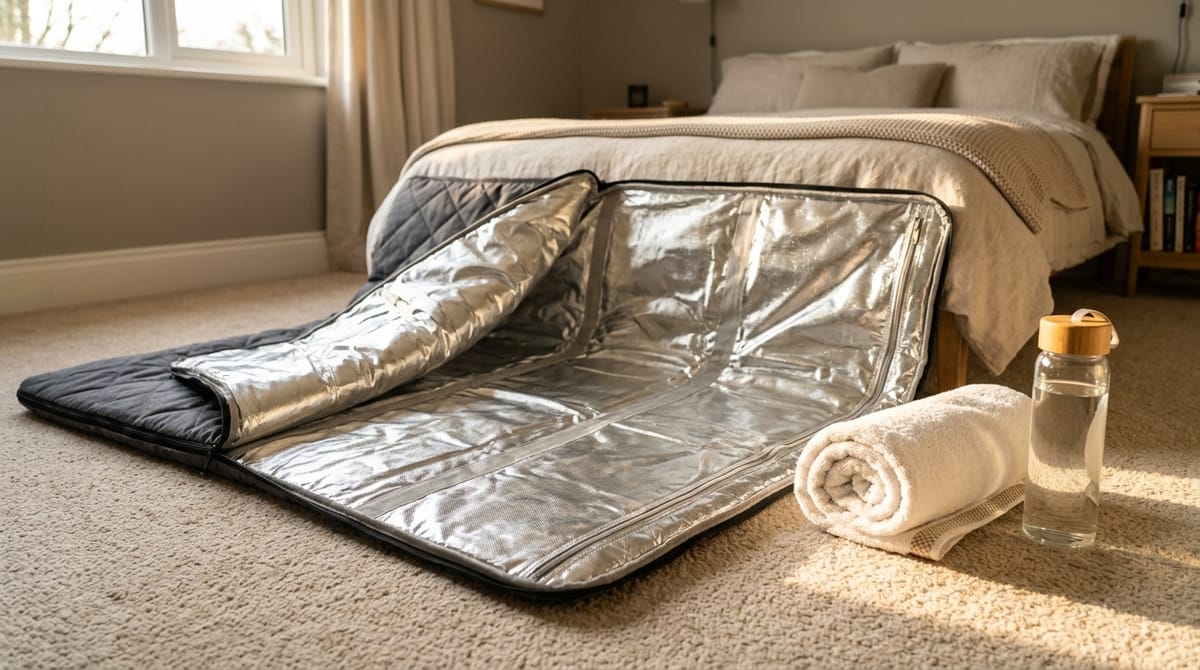
The blanket is the entry point: a zip-up body wrap such as the MiHIGH (a UK infrared-blanket brand) lists around £315, is 180cm long for users up to 196cm, supports up to 150kg, and uses a PU-leather exterior with a CE-approved, low-EMF heating layer. You lie down and stay wrapped to the shoulders for 30 to 60 minutes. A tent adds an upright, head-out experience and usually a bit more power. A dome is the closest thing to a cabin you can still wheel into a corner, but at that price you are competing with entry-level fixed infrared cabins.
How hot does a portable sauna get?
Cooler than you might expect, and that is by design. A portable infrared unit typically tops out at 60 to 65°C, against 80 to 100°C in a traditional heater sauna. The Ridgeyard portable tent, for example, is rated to a maximum of 60°C, while the GNB XL Deluxe controller offers five settings up to 65°C.
The lower number is not a weakness. Infrared warms your body rather than the air, so you sweat at a gentler ambient temperature. If your goal is heat-shock and a roaring 90°C room, a portable sauna will disappoint. If your goal is a comfortable, sustainable sweat for recovery or relaxation, the cooler infrared profile is the point. Our guide to what temperature a sauna should be covers this trade-off in detail.
Are portable saunas low-EMF?
EMF (electromagnetic field emission, measured in milligauss) is the one spec worth scrutinising before you buy. The heating elements sit inches from your body, so a high-emission panel matters more here than in a large cabin. The catch: stated EMF ratings on cheap sauna tents are frequently inaccurate when independently measured, so the printed number is not always trustworthy.
Two things separate a genuinely low-EMF unit from a marketing claim. First, the panel technology: carbon-fibre heating elements heat faster and emit less EMF than the older ceramic or quartz rod elements common in budget tents. Second, independent verification. Firzone (a UK infrared-sauna importer) publishes measured figures of 0 to 4 milligauss at the seated position across its range, and the Firzone FZ-100 pairs that with 900W and three mica panels in a 10kg unit that folds to 73 by 18 by 103cm. If a listing only gives you a vague "low-EMF" badge with no number and no panel type, treat it with caution. The general concept is covered in the Wikipedia entry on the electromagnetic field.
Sauna blanket or sauna tent: which should you buy?
Buy the blanket if you want maximum portability and the lowest price, you are happy lying down, and storage space is tight. It is the format that genuinely disappears into a cupboard. The trade-off is that your head and often your hands stay outside the heat, and you cannot read or scroll comfortably while wrapped.
Buy the tent if sitting upright with your head out matters to you, you want a slightly hotter enclosure, and you have a corner to assemble it in. It is bulkier and pricier, but closer to the ritual of a real sauna. If you are still weighing infrared against the traditional experience, our sauna blanket vs traditional sauna comparison goes deeper, and the full-spectrum vs near-infrared guide explains the wavelength differences.
How much do portable saunas cost in the UK?
Three clear price bands, all in GBP:
- Blankets: roughly £150 to £500. The MiHIGH sits around £315 at list price and is often discounted; sub-£200 blankets exist but scrutinise the EMF and material claims.
- Tents: roughly £350 to £700. Models from VEVOR, Ridgeyard and GNB fall in this band at 600W to 1000W.
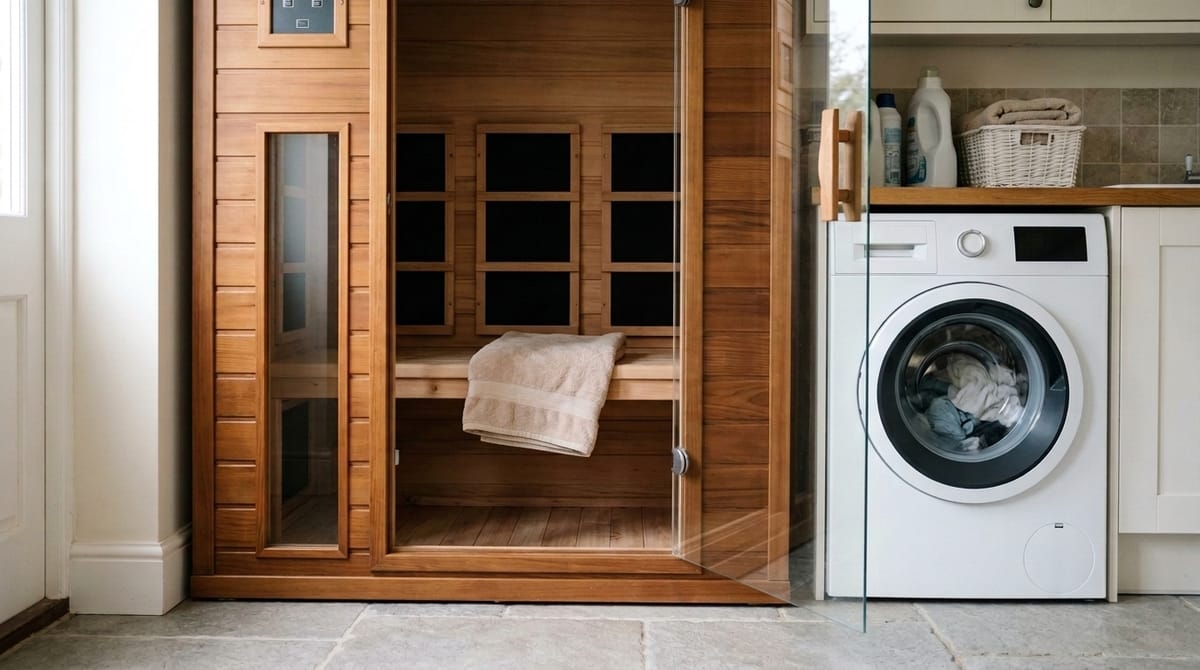
- Domes and pods: £1,200 and up, where you start comparing against entry-level fixed cabins.
For context, a premium full-spectrum infrared cabin in the UK runs to several thousand pounds, with £7,000 a realistic figure for a high-end build. A sub-£500 portable is therefore a low-commitment way to find out whether regular infrared sessions suit you before you commit to a permanent installation.
Is a portable sauna worth it versus a cabin?
A portable sauna is worth it when space, budget or commitment rule out a cabin. It plugs into a standard socket, needs no installation or electrician, and stores away between uses. For renters, small homes, and anyone testing the water on infrared, it is the sensible first step.
It is not worth it if you specifically want a hot, social, steam-and-stones Finnish sauna, or if you already know you will use a sauna daily and have the space for a cabin. In that case the per-session economics and the experience both favour a fixed unit. If you are leaning that way, start with our home sauna buying guide and the best infrared saunas under £1,500.
What to look for when buying
Check the EMF figure and panel type
Prefer carbon-fibre panels and a published milligauss figure measured at the body. Treat a vague 'low-EMF' badge with no number as a red flag.
Confirm the heat ceiling
Most portables top out at 60-65°C. If a listing claims far higher, be sceptical, and remember infrared sweats you at a lower air temperature anyway.
Match the format to your space
Blanket for cupboard storage and lying down; tent for upright head-out sessions; dome only if you have the floor space and budget.
Verify size and weight limits
Blankets list a maximum user height and weight (the MiHIGH covers up to 196cm and 150kg). Tents vary in seat size, so check before buying.
Look for CE approval and a warranty
A CE mark and a clear UK return and warranty policy separate reputable importers from grey-market listings.
Frequently asked questions
What is the best portable sauna in the UK?
Can you get a portable traditional sauna?
How hot does a portable infrared sauna get?
Are infrared sauna blankets safe and low-EMF?
Do portable saunas use a lot of electricity?
Sauna Blanket vs Traditional Sauna UK 2026
Full-Spectrum vs Near-Infrared Sauna UK 2026
Best Infrared Sauna Under £1,500 UK 2026
Home Sauna Buying Guide UK 2026
Not sure portable is right for you?
Compare portable infrared against a full home sauna setup before you spend.