Comparison · 2 picks
Wood-Fired vs Electric Sauna Heater (UK 2026)
Affiliate disclosure: we may earn a commission when you buy through links on this page, at no extra cost to you. Our verdicts are our own and are not influenced by compensation.
The heater is the single most consequential decision when buying a UK home sauna - more than wood type, more than cabin size, and arguably more than indoor-versus-outdoor. The wood-fired-vs-electric choice shapes the ritual (45-minute fire-tending or 15-minute on-button), the install cost (£700-£1,500 electrician or £200-£400 chimney + Building Regs), the running cost, and the home insurance considerations. This comparison covers all five dimensions honestly so you can pick the heater that matches your actual use pattern.
At a glance
All 2 options side by side.
| Wood-Fired Sauna Heater | 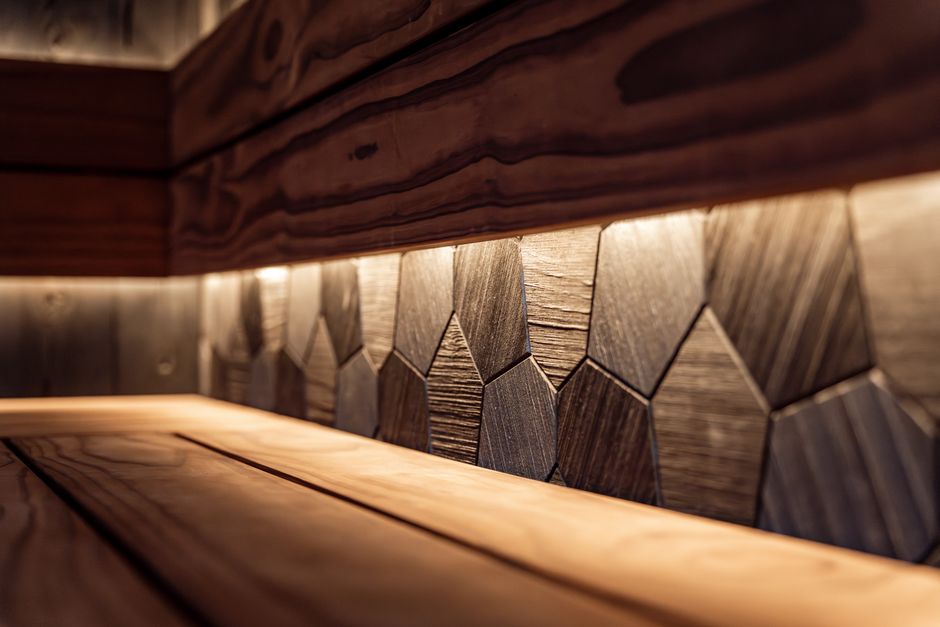 Electric Sauna Heater Electric Sauna Heater | |
|---|---|---|
| Price | £800 | £700 |
| Best for | The right pick for users who treat the sauna as an evening ritual, want the authentic experience, and are willing to plan sessions 45 minutes ahead. | The right pick for users who want sauna sessions on demand, prefer simplicity to ritual, and have the £700-£1,500 budget headroom for the electrician install. |
| Review | Read review → | Read review → |
The picks in detail
Wood-Fired Sauna Heater
Bottom line. The right pick for users who treat the sauna as an evening ritual, want the authentic experience, and are willing to plan sessions 45 minutes ahead. The skipped electrician cost typically funds the chimney install and first 5 years of wood. Pair with Harvia M3 (£600-£900) or Dundalk Tundra (£900-£1,300).
Pros
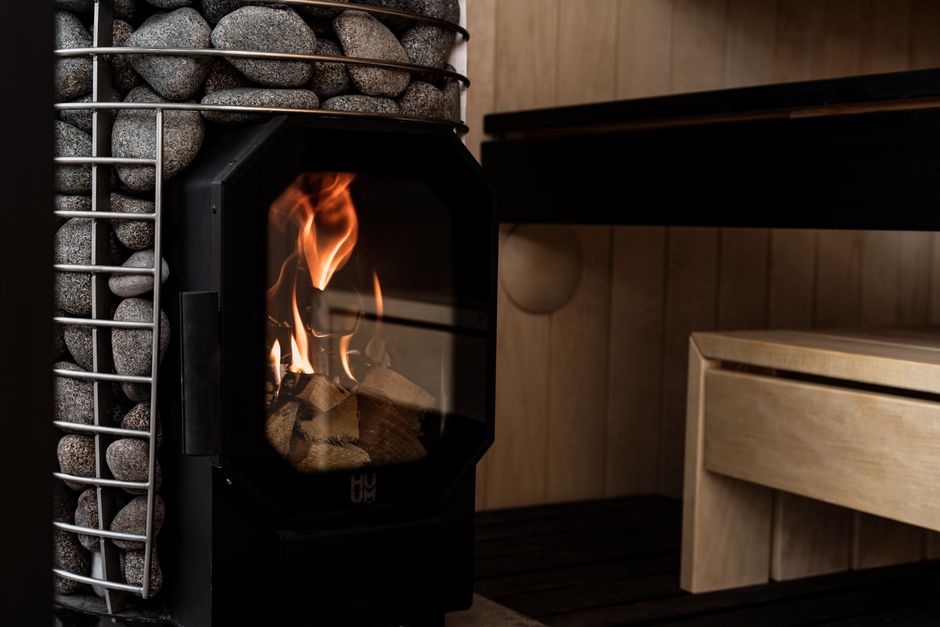
- Authentic Finnish experience - actual wood crackle, smoke through the chimney, visible flame through firebox door
- No electrician install - skips £700-£1,500 on hard-wired 32A circuits, the biggest single-cost saving
- Independent of electricity supply - works during power cuts and at off-grid garden locations
- Running cost £20-£40/month for weekly use on kiln-dried hardwood (birch/ash/beech)
- Heat character is wetter and more enveloping - users describe it as fundamentally different from electric
Cons
- 30-45 minute heat-up time from cold - the binding constraint for spontaneous use
- Chimney install needs UK Building Regs sign-off (Approved Document J) at £200-£400
- Annual chimney sweep needed (£60-£100) - HETAS-registered for the safety certification
- Wood storage is real estate - ~1 cubic metre dry-store for a winter's supply
- Sparks and ash management - the surrounding area needs fireproof ground (gravel or paving), not lawn
Electric Sauna Heater
Bottom line. The right pick for users who want sauna sessions on demand, prefer simplicity to ritual, and have the £700-£1,500 budget headroom for the electrician install. Pair with Harvia Vega (£400-£700, value), Harvia Cilindro (£900-£1,400, mid), or Huum Drop (£1,400-£2,200, premium).
Pros
- 15-20 minute heat-up at 6-8kW - matches the time it takes to undress and shower beforehand
- Push-button on/off via wall control - no fire-tending skill needed
- Programmable timers and pre-heat scheduling on premium models (Harvia Xenio, Huum UKU)
- No chimney or fireproof ground requirements - simpler garden install footprint
- No fire-related home insurance considerations - cheaper annual premium impact than wood-fired
Cons
- Hard-wired 32A circuit by a Part P-registered electrician - typically £700-£1,500 install cost
- Running cost ~£8-£15/month at 2x weekly use - higher than wood-fired's £20-£40 only over very heavy use
- Depends on home electrical supply - older UK homes (pre-1960) may need a consumer unit upgrade for 32A
- Heat character is drier and more even - some users describe it as less characterful than wood
- Goes down with the power - storms or outages take the sauna offline
How does heat quality actually differ between the two?
The most cited difference between wood-fired and electric saunas is the "character" of the heat - and the description varies enough between users that it's worth being precise about what's measurable.
Measurable differences: wood-fired heaters typically run at higher stone temperatures (450-650°C surface) than electric (350-450°C), which produces a sharper löyly (steam burst) when water is thrown on the stones. The infrared radiation from a wood-fired heater is also broader-spectrum because the metal firebox itself radiates alongside the stones. Both effects are reproducible in physiological measurements - wood-fired sessions tend to produce slightly higher peak skin temperatures and more vigorous sweating at the same ambient air temperature.
Subjective differences: wood-fired users consistently describe the heat as "wetter", "heavier", and "more enveloping". This is partially genuine (the löyly steam burst is sharper) and partially psychological (the visible fire, the wood smell, the crackling). The subjective gap is large enough that experienced sauna users often have a strong preference one way or the other - it's worth trying both formats before committing if possible.
For users who've only experienced electric sauna at a UK gym or spa, the wood-fired authentic experience is genuinely different in a way that's hard to describe without trying it. The Finnish-tradition framing of sauna ritual assumes wood-fired heat; electric is the 20th-century convenience adaptation.
What does each heater actually cost to install in the UK?
Wood-fired install (typical UK garden barrel): Heater kit £600-£1,300 (Harvia M3 baseline). Twin-wall insulated stainless flue + roof terminal kit £200-£400. Building Regs sign-off for the chimney work (Approved Document J) £150-£300. Fireproof ground around chimney exit £50-£200 if not already paved. Total install cost: £1,000-£2,200.
Electric install (typical UK garden or indoor cabin): Heater kit £400-£2,200 (Harvia Vega to Huum Drop range). Part P-registered electrician for 32A hard-wired circuit £700-£1,500 (the trench + armoured cable to a garden install is the cost; indoor installs are at the lower end). Consumer unit upgrade if needed £200-£400 (older homes only). Total install cost: £1,100-£4,100.
The honest framing: at the budget end (£600-£700 heater kit either way), wood-fired saves ~£500-£900 in install costs by skipping the electrician. At the premium end (£1,400+ heater either way), the install cost difference narrows because both options need professional install work.
Which heater is cheaper to run over 10 years?
Running cost depends on usage frequency and UK fuel pricing. Modelled across a 10-year horizon at 2x weekly sessions:
Wood-fired: ~30kg of kiln-dried hardwood per session at £0.55/kg = £16.50/session. At 100 sessions/year = £1,650/year. 10-year fuel cost: £16,500. Add £700-£1,000 of annual chimney sweep cost across 10 years = £17,200-£17,500 total running cost.
Electric (6kW heater, 90-min session): 9 kWh per session at £0.27/kWh = £2.43/session. At 100 sessions/year = £243/year. 10-year electricity cost: £2,430. No annual maintenance cycle. Total running cost: £2,430.
Electric is roughly 7× cheaper to run over 10 years than wood-fired at typical UK usage. But the upfront install gap (£1,100-£4,100 electric vs £1,000-£2,200 wood) means the total 10-year cost of ownership is closer than the running-cost figures alone suggest:
- Wood-fired total 10-year cost: £1,000-£2,200 install + £17,200-£17,500 running = £18,200-£19,700
- Electric total 10-year cost: £1,100-£4,100 install + £2,430 running = £3,530-£6,530
The bottom line: electric is genuinely cheaper over 10 years, by £12,000-£15,000 at moderate use. The wood-fired premium is a choice you make for ritual, not for economics.
Which Building Regulations apply to each heater type?
Wood-fired heaters trigger Approved Document J (combustion appliances and fuel storage systems) under the Building Regulations. The key requirements for sauna chimneys: twin-wall insulated flue with 50mm minimum clearance from combustible materials, 1m minimum clearance from any window or roof, terminal cap meeting BS EN 1856, and HETAS-registered installation or local-authority Building Control sign-off after the install. Most reputable UK barrel sauna suppliers (Dundalk, Almost Heaven UK distributors) supply Building-Regs-compliant chimney kits and have installer relationships.
Electric heaters trigger Approved Document P (electrical safety) for the 32A hard-wired circuit. The circuit must be installed by a Part P-registered electrician under the standard BS 7671 requirements, and the work is notifiable to your local authority Building Control. For outdoor garden installs, additional requirements apply: IP66-rated junction boxes in the cabin, armoured SWA cable buried at minimum 600mm depth (or surface-run in steel conduit), and earth bonding to the metal cabin frame.
Both routes are normal building work that competent specialists handle routinely. The administrative cost is similar (£150-£400) but the practical complexity is different - wood-fired needs a clear chimney routing path, electric needs a clear cable run from the consumer unit.
Frequently asked questions
Q01Can I retrofit a wood-fired heater into an electric sauna later?
Q02Is a wood-fired sauna safe in a UK garden with neighbours close by?
Q03How long does a wood-fired sauna heater last?
Q04Can I use waste wood or scrap timber in a wood-fired sauna?
Q05Do electric saunas need to be on a separate consumer unit?
Q06Which heater type is better for resale value of the sauna?
Best Barrel Sauna UK 2026
Home Sauna Buying Guide UK 2026
Planning Permission for a Garden Sauna UK