Best Barrel Sauna UK 2026: Honest Buying Guide
Best barrel saunas UK 2026 - £3,000-£15,000 range. Almost Heaven, Dundalk LeisureCraft, Northern Lights, plus UK-made options. Red cedar vs thermo-spruce.
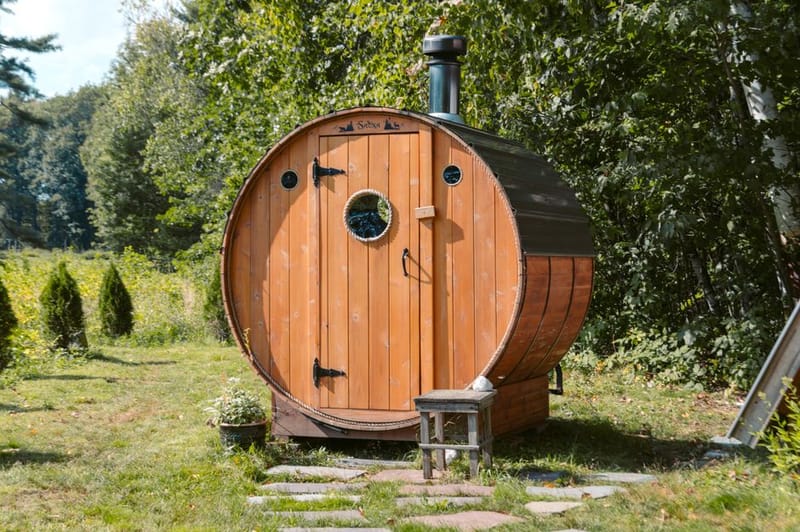
A barrel sauna is a genuinely different proposition from an indoor cabin kit. The curved walls concentrate radiant heat, the cylinder shape gives better air circulation than a flat-walled cube, and the outdoor garden setting changes the ritual entirely - you're walking out into cold air after each round, not just opening a door. This guide covers the four UK-available brands worth buying in 2026, the wood-choice decision (red cedar vs thermo-spruce), and the wood-fired vs electric heater trade-off that shapes the running cost more than any other variable.
Which 4 barrel saunas do we pick for UK buyers?
| Almost Heaven Salem Pinnacle (6-person) | Dundalk LeisureCraft Knotty Cedar (4-person) | Northern Lights Tranquillity 6' | Garden Sauna Co UK 6' Thermo (UK-made) | |
|---|---|---|---|---|
| Capacity | 6 people on facing benches (200cm long) | 4 people on facing benches | 4 people on facing benches | 4 people on facing benches |
| Construction | Western red cedar - rot-resistant, naturally aromatic | Canadian red cedar with knotty grade - cedar oil aroma, lower price than clear cedar | Thermo-treated spruce - more rot-resistant than untreated spruce, lower cost than cedar | Thermo-treated spruce - UK-manufactured (no transatlantic shipping) |
| Heater options | Electric Harvia 8kW OR wood-fired (Almost Heaven Tundra) | Electric Harvia 6-8kW OR wood-fired (Dundalk's own Tundra) | Electric Harvia 6-8kW OR wood-fired Northern Lights option | Electric Harvia 6kW (wood-fired add-on £600) |
| Window | Optional rear window (recommended for the view) | Standard rear porthole window | Optional rear window add-on | Standard rear porthole window included |
| Dimensions | ~230cm long × 200cm diameter | ~200cm long × 200cm diameter | ~183cm long × 200cm diameter | ~183cm long × 200cm diameter |
| Install | Foundation (gravel or concrete pad) + 1-day assembly. Wood-fired skips electrician. | Same as Almost Heaven - foundation + assembly | Foundation + 1-day assembly. Lighter than cedar builds (easier delivery) | UK delivery is the cost advantage. Foundation + assembly same as imports. |
| Warranty | 10 years structural on cedar | 5 years structural | 5 years structural | 3 years structural |
| Where to buy (UK) | Almost Heaven authorised distributors (UK direct shipping available) | Dundalk LeisureCraft UK distributor + Wayfair UK | Northern Lights Cedar UK distributor | Garden Sauna Co direct (UK-based) |
| All-in cost | £9,500-£11,500 including delivery + foundation | £7,000-£8,500 including delivery + foundation | £5,000-£6,500 including delivery + foundation | £3,000-£4,500 including UK delivery + foundation |
Why does the barrel shape work better than a flat cabin?
A barrel sauna's curved walls aren't aesthetic - they're functional. In a flat-walled cabin, hot air rises and stratifies at the ceiling while corners stay relatively cool. In a barrel, the curved walls deflect rising air back across the seating zone in a continuous loop. The practical result is more even heat distribution across both upper and lower benches, with no cold corners and a noticeably faster heat-up time per cubic metre.
The shape also has structural advantages. The barrel's compression ring (the galvanised steel bands wrapping the staves) makes the cylinder stronger than the equivalent cabin frame, which is why most barrel saunas can ship as flat-pack components and be assembled by two people in a single afternoon. Premium cedar barrels routinely last 20-30 years with annual oiling; thermo-spruce barrels last 12-18 years before serious refurbishment is needed.
The aesthetic is the third advantage and the one most buyers cite as the deciding factor. A barrel sauna in a UK garden is a visible commitment to the ritual - it's not hidden in a spare bedroom or relegated to a basement. The cedar oxidises to a soft silver-grey over its first 18 months unless treated with UV-blocking oil, which most owners actively want.
Red cedar or thermo-spruce: which wood should you choose?
The wood choice is the single biggest variable after the heater type. The two dominant options in 2026 are Western red cedar (the premium choice, used by Almost Heaven and Dundalk) and thermo-treated spruce (the value choice, used by Northern Lights and most UK-made barrels).
Western red cedar. Natural rot resistance (the cedar oil is the same compound used in mothballs and is naturally antifungal), aromatic when warm (the smell most people associate with traditional Scandinavian saunas), and stable under repeated heat cycling. Cedar shrinks and expands less than spruce, so panel gaps stay small over years of use. Downsides: cedar is heavier (delivery to upstairs gardens is harder), 30-50% more expensive per cubic metre, and requires UV-blocking oil annually to slow the silver-grey weathering process.
Thermo-treated spruce. Heat-treated to ~190-200°C to drive out moisture, destroy mould spores, and stabilise the dimensions. The treatment makes spruce rot-resistant without chemical preservatives and gives it a warm caramel colour that most buyers prefer to untreated spruce's blonde tone. Thermo-spruce is roughly 60-70% the price of cedar, lighter to handle, and structurally equivalent for the first 12-15 years. Downsides: less aromatic than cedar, slightly more dimensionally unstable across multiple heat cycles, and tends to develop micro-cracks on the heater-facing wall after 8-10 years.
For the typical UK barrel sauna owner using the unit 2-3 times per week, both options are credible. Cedar is the right pick if you expect 20+ years of use and want the aromatic experience. Thermo-spruce is the right pick if budget matters and you're comfortable refurbishing the inside panels around year 12.
Should you choose wood-fired or electric heating?
The heater choice shapes both the ritual and the running cost. Both options are widely available across all four brands above.
Wood-fired (Harvia M3, Dundalk Tundra, Almost Heaven Tundra). The authentic Finnish experience - actual wood crackling, smoke through a chimney, 30-45 minute heat-up time. Uses kiln-dried hardwood (birch, ash, beech) at roughly £20-£40/month for weekly use. Skips the £700-£1,200 electrician cost entirely. Requires a chimney with 1m clearance from any wall or roof - check UK Building Regulations Approved Document J for the chimney and clearance specs. Best for: users who treat the sauna as an evening ritual, not a spontaneous habit.
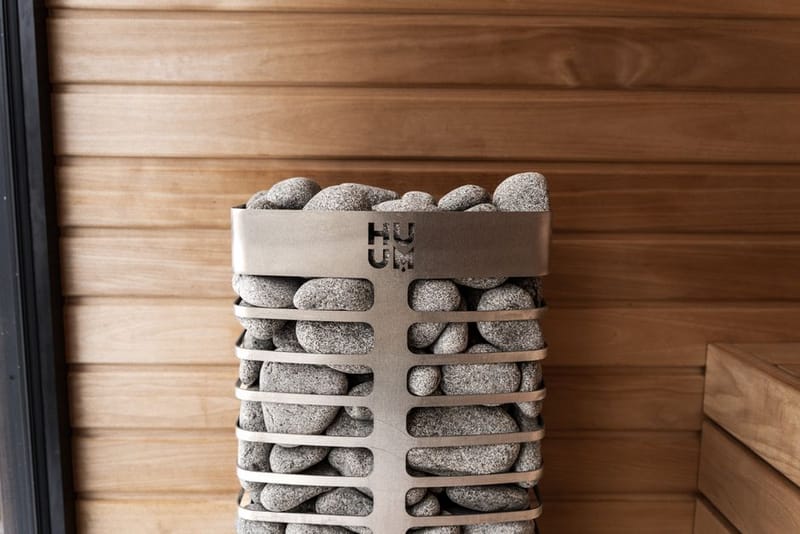
Electric (Harvia Vega, Harvia Cilindro, Huum Drop). 15-20 minute heat-up time, no wood storage, no chimney. Hard-wired 32A circuit by a Part P-registered electrician (£700-£1,200 install including trench + armoured cable to the garden). Running cost ~£8-£15/month at 2x weekly sessions on a standard UK electricity tariff. Best for: users who want sauna sessions on demand and don't want the wood-handling commitment.
A useful middle ground: some buyers install electric initially (lower commitment to a routine, no fire-related insurance concerns) then add a wood-fired secondary heater 2-3 years in once the habit is established. Both Harvia and Dundalk sell barrels with dual-heater compatibility for exactly this upgrade path.
What does an outdoor barrel sauna really cost all-in?
Headline kit prices in the comparison table above are roughly half the all-in cost for a typical UK install. The honest breakdown:
Premium electric (Almost Heaven Salem Pinnacle): Kit £9,500. Delivery £400-£800 (kerbside, then DIY into the garden). Foundation: £200-£500 DIY gravel pad or £800-£1,500 concrete pad. Electrician: £900-£1,500 for a 32A trenched line. Optional rear window upgrade: £300-£500. Total: £11,300-£13,800 all-in.
Premium wood-fired (Dundalk Knotty Cedar): Kit £7,000. Delivery £400-£700. Foundation: £200-£500 gravel or £800-£1,500 concrete. Chimney and Building Regs sign-off: £200-£400. Total: £7,800-£9,600 all-in. The chimney route saves ~£1,000 versus the electric trench.
Mid-tier (Northern Lights Tranquillity): Kit £5,000. Delivery £300-£600 (lighter unit). Foundation: £200-£500. Wood-fired adds £200-£400 for chimney; electric adds £900-£1,500 for trench. Total: £5,700-£7,400 wood-fired, £6,600-£8,100 electric.
Entry-tier UK-made (Garden Sauna Co): Kit £3,500. UK delivery £100-£250 (the big advantage). Foundation: £200-£500. Electric heater base spec; wood-fired add-on £600. Total: £3,800-£4,800 electric, £4,400-£5,400 wood-fired.
Which barrel sauna should you actually buy?
Premium experience + 5-6 person capacity + £10,000+ budget → Almost Heaven Salem Pinnacle
The Salem Pinnacle is the largest premium barrel widely available in the UK and the right pick for households who'll regularly host group sessions. The cedar build is genuinely 20+ year quality and the rear window option is worth specifying - it transforms the experience from enclosed cabin to garden retreat. Pair with the Tundra wood-fired heater for authenticity or the Harvia 8kW electric for convenience.
Premium authenticity + 4-person + £7,000-£8,500 budget → Dundalk LeisureCraft Knotty Cedar
The Knotty Cedar grade is the smartest premium pick - it's the same Canadian red cedar as the clear grade with knots that don't affect performance and shave £1,500-£2,000 off the price. The 4-person size is the right tier for most UK households (couples + occasional guests). Buy wood-fired and skip the electrician cost; the £40/month hardwood spend is offset by the no-trench install.
Mid-tier value + thermo-spruce → Northern Lights Tranquillity 6'
The Tranquillity is the best balance of price, build quality, and aesthetics in the £5,000-£6,000 tier. Thermo-spruce is a credible alternative to cedar for 12-15 year service life and the lighter weight makes UK delivery easier. The optional rear window is worth specifying. Either heater type works; wood-fired again skips the electrician.
Entry-level + UK-made + £3,000-£4,500 budget → Garden Sauna Co UK 6' Thermo
The strongest case for UK-made is the £100-£250 delivery cost (versus £400-£800 for transatlantic imports) and the 3-week lead time versus 8-12 weeks for cedar imports. The thermo-spruce build is functionally equivalent to Northern Lights at lower cost. The 3-year warranty is shorter than the imports' 5 or 10 years - factor that into the cost comparison if 10-year reliability matters.
Use a Part P-registered electrician for any electric barrel
Outdoor 32A circuits trenched to the garden require Part P certification under UK Building Regulations. The work is notifiable to your local authority building control. Specialist sauna electricians know about IP-rated junction boxes, armoured cable burial depth, and the consumer-unit upgrades older UK homes typically need. Cheaper non-Part P quotes invalidate your home insurance if there's ever an incident.
Frequently asked questions
Do I need planning permission for a barrel sauna in the UK?
How long does a barrel sauna last in the UK climate?
Can a wood-fired barrel sauna meet UK Building Regulations?
How long does a wood-fired barrel take to heat up versus electric?
What's the difference between barrel and cabin saunas for the same budget?
Do barrel saunas need a concrete foundation?
Best 4-Person Home Sauna UK 2026
Best 2-Person Home Sauna UK 2026
Home Sauna Buying Guide UK 2026
Planning Permission for a Garden Sauna UK
Barrel Sauna vs Cabin Sauna
Considering indoor instead?
The indoor 4-person tier is often a cheaper start with the option to upgrade to a garden barrel later.