How to Sauna: A Complete Beginner's Guide for 2026
How to sauna for the first time: temperatures, session length, hydration, what to wear, and löyly explained. Plain-English UK guide for beginners.
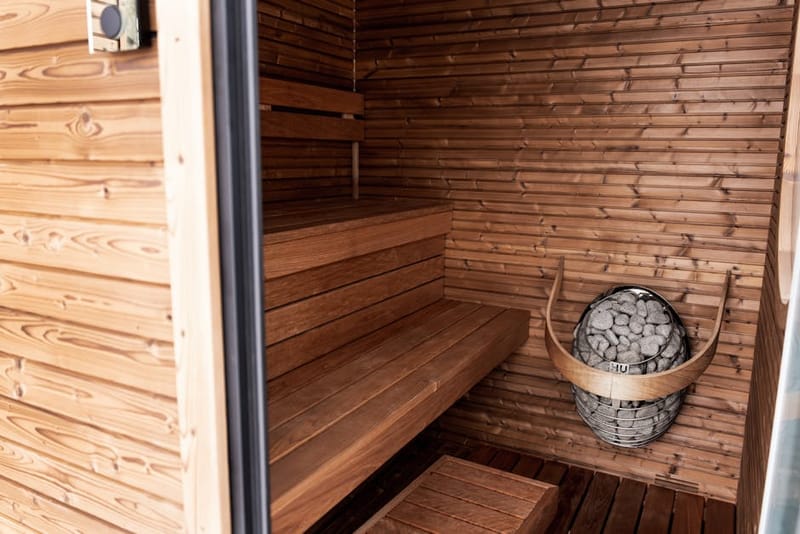
What you actually need to know before your first sauna
A practical, plain-English starting point - temperatures, timing, etiquette, and the safety basics
A sauna is a wood-lined room heated to between roughly 70°C and 100°C, designed to make you sweat heavily and then cool off - usually in cold water or fresh air - before going back in. That's it. The rest is detail. This guide walks you through how to sauna properly the first time, including what to wear, how long to stay in, how to manage the heat, and the small handful of safety points worth knowing before you start.
Sauna culture has grown quickly in the UK since 2023, with the British Sauna Society counting over 200 wild sauna venues by mid-2025 (up from around 45 just two years earlier). Most are mobile or beach saunas, run as small businesses on the coast or beside lakes. Home saunas - including infrared cabins - are also increasingly common in UK gardens and converted utility rooms. The basics work the same way in all of them.
If you have a heart condition, are pregnant, or take medication that affects blood pressure or hydration, please speak to your GP before using a sauna for the first time. The rest of this guide assumes you're a healthy adult trying it out.
How hot is a sauna actually - and where is that temperature measured?
The headline number on a sauna's thermometer can be misleading because it depends entirely on where the thermometer is. Heat in a sauna is strongly stratified: the air near the ceiling is far hotter than the air near the floor, and the bench you sit on is somewhere in between. A reading of 90°C in one sauna can feel quite different from 90°C in another simply because of where the gauge is mounted.
Useful temperature ranges to know:
- Stove / heater surface: 200°C+ - never touch, and never assume a guard plate is cool
- Ceiling air (where thermometers are usually mounted): 80–110°C in a traditional Finnish sauna
- Head height when seated on the upper bench: 70–90°C - this is what your body actually experiences
- Lower bench / floor: 40–60°C - significantly cooler, useful if you find the upper bench overwhelming
- Infrared cabin (very different mechanism): 45–65°C air temperature, with most of the heat delivered by radiant panels rather than hot air
If you're a beginner, start on the lower bench. There is no rule that says you have to sit at the top. Lower bench, shorter rounds, and breathing slowly through the nose are the three things that make a first sauna pleasant rather than alarming.
Traditional, Finnish-style, and infrared - what's the difference?
Three terms get used loosely in marketing, and they describe meaningfully different experiences.
Traditional / Finnish-style sauna. A wood-lined room with a stove (electric or wood-burning) topped with stones. The air sits at 70–100°C and humidity is low until you ladle water onto the stones - that's löyly, the soft, fierce pulse of steam that briefly raises both temperature and humidity. Löyly is what most people mean when they describe a sauna as feeling "alive". A genuinely Finnish-style sauna has löyly capability; many cheaper electric units do not, which is why "Finnish-style" used in marketing is sometimes a stretch.
Steam room / Turkish hammam. Lower air temperature (around 40–50°C) but close to 100% humidity, generated by a separate steam generator. This is a different physiological experience and not the focus of this guide.
Infrared cabin. A wooden cabin with infrared panels that warm your body directly rather than heating the air around you. Air temperature stays around 45–65°C, sessions tend to be longer (20–45 minutes), and there's no löyly - water on the panels would damage them. Infrared cabins are popular in UK homes because they run from a 13A plug, fit in small spaces, and don't need specialist ventilation. They are not equivalent to a traditional sauna; the cardiovascular load and the subjective experience are different. Both can be worthwhile - they just aren't interchangeable.
How long should you stay in?
For a first session, 8–12 minutes is a sensible target. Build from there.
A normal pattern across the UK and Nordic sauna scene looks roughly like this:
Shower first
A quick rinse to start with clean skin. Some venues require it; even where they don't, it's good etiquette.
First round: 8–12 minutes
Sit on a clean towel on the lower or middle bench. Breathe through the nose. Leave whenever you've had enough - not when a clock tells you to.
Cool down: 5–10 minutes
Cold shower, plunge pool, outdoor air, or a swim if you're at a wild sauna. The contrast is where most of the cardiovascular effect comes from.
Hydrate
Plain water is fine. A glass between rounds. Electrolyte drinks help only on longer sessions.
Round two: 10–15 minutes
Slightly longer if you feel good, slightly shorter if you don't. You can move up a bench if the first round felt easy.
Optional round three: 10–15 minutes
Two or three rounds is a complete session. More than that is for regulars, not first-timers.
Final cool-down and rest
Sit, dressed in something warm, for 10–20 minutes before driving or doing anything demanding.
If you find yourself watching the clock, you're staying in too long. If you start feeling lightheaded, nauseous, or notice a pounding pulse, leave immediately and cool down. That isn't a failure - it's the correct response.
What to wear (and what to take)
UK sauna venues vary in their nudity conventions and you should follow the venue's house rules - but as a general guide:
- Most UK public saunas: swimwear is expected, especially in mixed-gender sessions
- Some wild sauna venues run nude-optional sessions: these are clearly labelled and usually single-sex or time-segregated
- Home saunas: entirely your call - towel-only is common
What you'll want with you:
- A large towel to sit on (most venues require this for hygiene - your sweat should not touch the bench)
- A second towel to dry off between rounds
- Flip-flops for the walk to the cold shower or plunge
- A water bottle
- A change of clothes for afterwards, including something warm - you will continue to sweat for 20–30 minutes after you leave the sauna
- A felt or wool sauna hat is traditional in Finland; it slightly insulates your scalp so you can stay in longer comfortably. Not essential, but useful if you find your head gets uncomfortably hot before the rest of you
Leave jewellery, glasses, and anything you wouldn't want at 90°C in a locker. Metal piercings can become uncomfortably hot.
Löyly: the most important word in sauna
Löyly (pronounced roughly "loy-loo") is the burst of steam created when water is ladled onto hot stones on top of the sauna stove. It briefly raises humidity and apparent temperature, often dramatically, and is the defining feature of a proper Finnish-style sauna.
Etiquette for a beginner:
- If others are in the sauna, ask before pouring water. Some prefer drier heat
- Use the wooden ladle from the bucket provided. Half a ladle is plenty for a small sauna; a full ladle in a large one
- Pour onto the stones, not the metal of the stove. Stones convert the water to steam; metal just makes a hiss
- Wait a few seconds, then breathe out as the wave reaches you - this stops the warm-air pulse feeling like it's catching your throat
- Never use anything other than plain water. Some saunas allow a few drops of birch or eucalyptus essential oil in the bucket; check first
Infrared cabins, as noted above, cannot do löyly. If löyly is what you want, you need traditional/Finnish-style.
Cold plunging, contrast bathing, and the cardiovascular case
Most of the published research on sauna health benefits comes out of Finland, where regular sauna use is the cultural norm. The most-cited paper is a 20-year cohort study published in JAMA Internal Medicine by Laukkanen and colleagues in 2015, which followed 2,315 middle-aged Finnish men and reported that those who used a sauna 4–7 times per week had lower all-cause and cardiovascular mortality compared with those who used one once per week. A follow-up review by Kunutsor and colleagues in 2018 extended the picture, suggesting associations with reduced risk of dementia and improved blood-pressure profiles. For a deeper breakdown - what the Finnish data actually shows, what it doesn't, and how to read the numbers honestly - see our Sauna Health Benefits: What the Evidence Actually Says pillar.
Two important caveats. First, these are observational cohort studies, not randomised trials - they show association, not proven cause. Second, the populations studied were Finnish adults using traditional saunas regularly over many years; the findings don't necessarily transfer one-to-one to short-term or infrared use. They're encouraging, not prescriptive. If a sauna is enjoyable, the cardiovascular response is real and consistent with the cohort data; if you hate every minute of it, no amount of evidence makes it the right tool for you.
The cooling-off phase matters. The cardiovascular load of a sauna comes from the alternation between heat and cold - heart rate climbs in the heat, blood vessels dilate, and the cool-down phase trains the system back the other way. This is why a sauna without a cold rinse or outdoor break afterwards feels different from a properly executed contrast session.
If you're new to cold exposure, start with a cool (not freezing) shower for 15–30 seconds. Build from there. Open-water plunging at a wild sauna venue is a separate skill - for first-timers, follow the venue's safety briefing carefully: cold water shock is a real risk in UK sea and lake temperatures, especially in winter.
Hydration and food
Expect to lose 0.5–1 litre of sweat across a normal three-round session, sometimes more in hotter saunas or with longer rounds. Drink plain water between rounds and afterwards. Electrolyte drinks are useful for longer sessions or in summer, but not strictly necessary for a beginner doing 30–60 minutes total.
A few practical food rules:
- Don't go in within an hour of a heavy meal - you'll feel uncomfortable
- Don't go in hungry either - a snack 30–60 minutes before is fine
- Avoid alcohol before and during. Sauna plus alcohol is genuinely dangerous: it impairs your ability to regulate temperature and recognise warning signs. Most venues prohibit it for this reason
- A small carbohydrate snack afterwards (toast, banana, biscuit) helps you feel normal again faster
When not to sauna
The widely-recognised contraindications are worth taking seriously. Speak to a GP before your first session if any apply:
- Uncontrolled high blood pressure, unstable angina, or recent heart attack
- Severe aortic stenosis or other significant valve disease
- Pregnancy - particularly the first trimester, but discuss with your midwife in any case
- Fever or acute illness - your thermoregulatory system is already loaded
- Medications that affect blood pressure, heart rate, or hydration (some diuretics, beta-blockers, certain antidepressants, lithium) - not necessarily a barrier, but worth flagging
- Skin conditions that flare with heat or sweat
And on a single-session basis, leave the sauna if you feel dizzy, nauseous, develop a headache, or your heart rate feels uncomfortable. The correct response to those signals is to walk out, sit somewhere cool, sip water, and not go back in that day. Pushing through is not part of the tradition.
Wild sauna vs home sauna - which should a UK beginner try first?
Both are reasonable starting points, but they're different experiences and serve different intents.
Try a wild sauna first if you're not yet sure whether sauna is for you. Most UK wild sauna venues charge £15–£30 for a 90-minute session including towel hire, run friendly first-timer slots, and have a host on site who'll talk you through the etiquette. You get to try a proper Finnish-style sauna without committing to anything, and the sea or lake is right there for cooling off. The British Sauna Society maintains a directory of registered venues.
Look at a home sauna if you've tried wild or commercial saunas a few times, know you like it, and want it as part of a regular routine. The investment ranges roughly from £1,500 for a basic infrared cabin up to £6,000+ for a full traditional outdoor barrel sauna. Plan permission, electrical work, and installation are typically not included in the headline price. We cover the home buying decision in detail in our UK home sauna buying guide.
For a deeper look at the wild sauna scene specifically, see our guides to wild sauna in the UK, beach saunas in 2026, and wild saunas in and around London.
Common mistakes first-timers make
Going straight to the top bench
The top bench can be 20–30°C hotter than the bottom. Start lower, work up.
Treating it as a competition
There is no medal for staying in longest. The strongest sauna users are usually the people who leave early and return for more rounds.
Skipping the cool-down
Most of the cardiovascular adaptation comes from the temperature contrast. A round without cooling off is half a round.
Pouring too much water on the stones
Half a ladle in a small sauna is plenty. A full bucket is uncomfortable for everyone and can crack the stones.
Drinking alcohol
Genuinely dangerous in a sauna. Save it for afterwards if at all.
Ignoring early warning signs
Dizziness, nausea, or a pounding head is the signal to leave - not the signal to tough it out for one more minute.
Driving immediately afterwards
Plan to rest for 20–30 minutes before driving. You'll be more dehydrated and less alert than you feel.
Frequently asked questions
How often should I sauna?
Is a sauna safe if I have high blood pressure?
Can children use a sauna?
Is infrared as good as traditional sauna?
Do I need to cold plunge afterwards?
Will sauna help me lose weight?
Are wild sauna sessions safe in winter?
Where to go next
Once you've had a first session under your belt, three useful directions to explore on this site:
- The wild sauna scene in the UK - the broader picture, including how the venue count has tripled since 2023
- Beach saunas in 2026 - coastal venues by region
- UK home sauna buying guide - for when you're ready to bring one home
And if you have a question this guide hasn't answered, the British Sauna Society and any registered wild sauna venue host are both reliable sources for UK-specific guidance.
Plan your first session
Find a UK wild sauna near you and book a beginner-friendly slot.
References cited in this guide: Laukkanen T, Khan H, Zaccardi F, Laukkanen JA. Association between sauna bathing and fatal cardiovascular and all-cause mortality events. JAMA Internal Medicine 2015;175(4):542–548. Kunutsor SK, Khan H, Zaccardi F, et al. Sauna bathing reduces the risk of stroke in Finnish men and women: a prospective cohort study. Neurology 2018;90(22):e1937–e1944. These are observational cohort studies, not randomised trials; treat the findings as supportive evidence of association rather than proof of cause. Always speak to a GP about your individual circumstances before starting regular sauna use.