Sauna and Cold Plunge: The Evidence-Based UK Protocol (2026)
The evidence-aligned UK sauna and cold plunge protocol in 2026 - Finnish KIHD cohort dose-response, the 3-round 10/2/5 protocol, and the safety lines.
The sauna-and-cold-plunge protocol has moved from biohacker territory to something close to mainstream UK wellness practice in 2026, and the evidence base has matured alongside. The headline results - lower cardiovascular mortality at 4 to 7 sauna sessions per week - come from the Finnish Kuopio Ischaemic Heart Disease (KIHD) cohort first reported by Jari Laukkanen and colleagues, and the mechanism studies have filled in the picture since. This guide covers the protocol that the published evidence actually supports, the physiology behind it, and the safety lines that matter.
What the published evidence actually shows
The headline evidence for sauna comes from a long-running Finnish observational cohort. The Kuopio Ischaemic Heart Disease (KIHD) study, led by Jari Laukkanen, tracked middle-aged Finnish men over more than 20 years and produced the most-cited finding in the sauna literature: those who used the sauna 4 to 7 times per week had a 63 percent lower risk of sudden cardiac death and a 50 percent lower cardiovascular mortality risk compared to once-a-week users. The dose-response is the key signal - the protective association scales with frequency, not just any-use vs none.
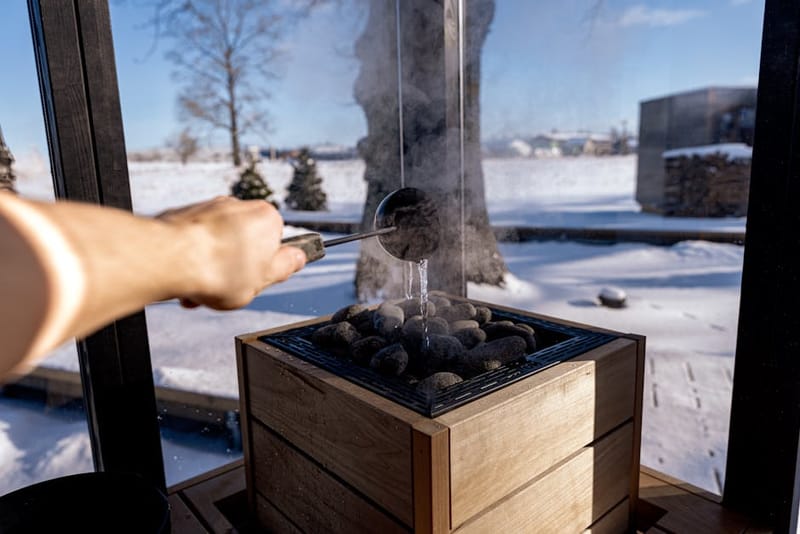
Subsequent papers from the KIHD cohort and others linked frequent sauna use to lower dementia risk, lower stroke risk, and lower all-cause mortality. The proposed mechanism is a combination of improved endothelial function, reduced systemic inflammation, and the heat shock protein response that protects cellular machinery. Sauna heat raises core body temperature by 1 to 2°C, increases heart rate to 100 to 150 bpm and triggers a vasodilator response that is physiologically comparable to moderate aerobic exercise.
The cold-plunge side of the protocol has a thinner direct-clinical evidence base but a clearer mechanism story. Cold immersion at 10 to 15°C triggers vasoconstriction, catecholamine release (norepinephrine and adrenaline), and activation of brown adipose tissue with downstream effects on glucose disposal and energy expenditure. The contrast between sauna vasodilation and cold-immersion vasoconstriction is the working hypothesis for why cycling the two would compound the cardiovascular signal beyond what sauna alone delivers.
An important honesty note: the strongest sauna evidence is observational not randomised-controlled. The KIHD cohort is large and long but cannot fully separate the sauna effect from the lifestyle correlates of being a frequent sauna user in Finland. Treat the cardiovascular dose-response as a reliable signal; treat any specific percentage claim as true for that cohort rather than as a guaranteed personal outcome.
The evidence-aligned protocol
The protocol that the published evidence supports is straightforward, well-tested in the Finnish tradition and now widely adopted in UK wild-sauna venues:
- Sauna round 1: 10 to 15 minutes at 70 to 90°C. First-timers should start shorter (5 to 8 minutes) and build up. Aim to leave the sauna while still feeling capable rather than waiting to feel uncomfortable.
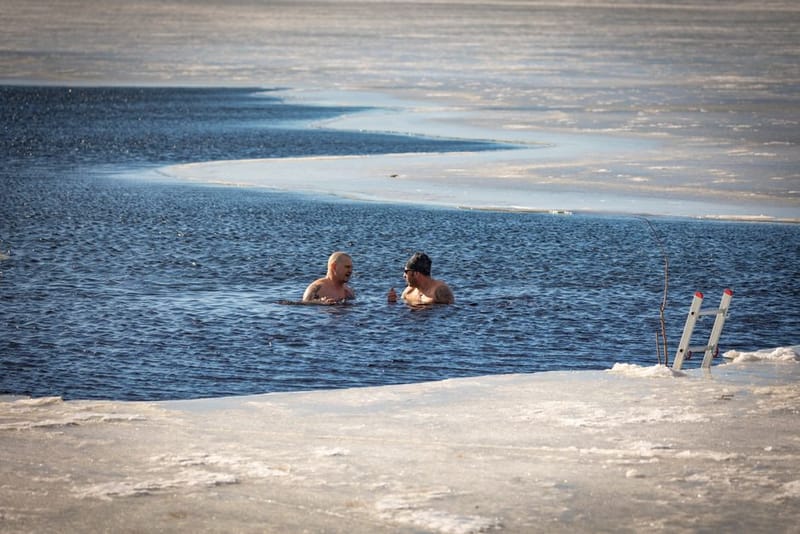
- Cold plunge: 1 to 3 minutes at 10 to 15°C. UK sea temperatures sit in or near this range most of the year. Below 10°C the recommended duration drops to 45 to 60 seconds for conditioned users; below 5°C the protocol shifts to a brief immersion only.
- Warm rest: 5 to 10 minutes of warm-rest in a robe or layered up, ideally outside the sauna with hot tea or water. The pause matters - the cardiovascular system needs the rest to capture the dose-response benefit rather than chaining straight into round two.
- Repeat: 2 to 4 cycles per session. Most published-evidence-aligned protocols sit at 3 cycles.
- End on cold: the final round ends with the cold plunge, not the sauna. Ending on cold and letting the body naturally rewarm activates brown adipose tissue and is the lever for the metabolic benefit beyond the cardiovascular dose response.
- Frequency: 2 to 4 sessions per week captures most of the documented benefit. The KIHD cohort signal scales further at 4 to 7 sessions per week, but the marginal benefit per additional session declines, and most UK lifestyles cannot sustain that frequency.
One sequencing question comes up often: sauna first or cold first? The Finnish tradition is unambiguous - sauna first, then cold. The cold-first sequence (cold immersion before the sauna) has growing fashion adoption but no equivalent evidence base. For evidence-aligned practice, stick with sauna first.
The physiology behind the protocol
The mechanism story is worth understanding because it informs what the protocol can and cannot deliver.
Sauna physiology:
- Core temperature rises 1 to 2°C during a typical 15-minute sauna round. This is the trigger for heat shock protein expression - molecular chaperones that help protect and repair cellular damage. HSP70 is the most-studied family.
- Heart rate rises to 100 to 150 bpm at typical sauna temperatures. The cardiovascular load is comparable to moderate aerobic exercise - which is the basis for sauna being described as 'passive cardio'.
- Endothelial function improves with repeated sauna exposure. This is the mechanism most strongly linked to the cardiovascular dose-response in the KIHD cohort.
- Brain-derived neurotrophic factor (BDNF) increases after sauna exposure - the proposed mechanism for the dementia and cognitive findings in the same cohort.
Cold plunge physiology:
- Vasoconstriction in skin and peripheral tissue is the immediate response. Blood pressure rises during the immersion itself.
- Catecholamine release (norepinephrine peaks particularly strongly) drives the alertness and mood elevation reported after cold immersion.
- Brown adipose tissue activation raises energy expenditure during natural rewarming. This is the lever for the metabolic story beyond the immediate cardiovascular response.
- Anti-inflammatory pathways are upregulated by short cold exposure, which is the working hypothesis for the recovery benefit in trained athletes.
The combined contrast effect - vasodilation then vasoconstriction repeated across cycles - is the cardiovascular workout the protocol delivers. It is plausible (though not proven by randomised trial) that the contrast adds more than the sum of sauna-alone and cold-alone.
Safety, contraindications and practical risks
Specific medical conditions require clearance from a doctor before starting a sauna-and-cold-plunge protocol. The thermal stress of contrast bathing significantly affects blood pressure and heart rate. The following conditions require professional guidance:
- Cardiovascular disease - any diagnosed CV condition, particularly recent myocardial infarction, unstable angina, or significant arrhythmia.
- Uncontrolled hypertension - the immediate blood-pressure response to cold immersion can be substantial.
- Peripheral vascular disease or Raynaud's phenomenon - cold immersion can trigger severe vasospasm.
- Pregnancy - both sauna and cold immersion are precautionary contraindications; discuss with a midwife or obstetrician.
- Acute illness, fever, or significant dehydration - delay the session.
- Alcohol or recreational drug use - significantly increases the risk of hyperthermia, hypothermia and loss of consciousness in the cold plunge. Avoid both during a sauna session.
Practical safety points:
- Hydrate before, during and after. A 15-minute sauna round can lose 0.5 litres of sweat. Two litres of water across a 2-hour session is a reasonable starting point.
- Use a buddy or supervised venue for first cold-plunge sessions. Cold-water shock and uncontrolled hyperventilation are the main acute risks.
- Time the rounds. First-timers tend to over-stay in the sauna and under-stay in the cold. A clock and a buddy reduce both errors.
Starting a contrast-bathing protocol
Pick a beginner-appropriate venue
First sessions should be at a manned venue with a host who can pace you. UK community saunas (Hackney, Bristol) and the better wild-sauna operators (Beach Box Brighton, Sea Scrub Margate) run beginner-friendly formats with experienced hosts.
Start short and build up
5 to 8 minutes in the sauna and 30 to 60 seconds in the cold for the first session. Build to the 10-to-15-minute sauna and 1-to-3-minute cold by sessions four or five. Trying the full protocol on day one is the standard rookie error.
Run 2 to 3 cycles, not more
Until you have 6 to 8 sessions of experience. The cardiovascular load of 4 cycles is real and worth building up to.
End on cold and let the body rewarm naturally
Sit warm and quiet for 10 to 15 minutes after the final cold round. This is when brown-adipose activation runs.
Hydrate before, during, between and after
Two litres of water across a 2-hour session is the minimum; electrolyte support helps for sessions over 90 minutes.
Get medical clearance for any cardiovascular or vascular condition
Hypertension, recent myocardial infarction, Raynaud's, peripheral vascular disease and pregnancy all need a GP or specialist conversation before starting.
Frequently asked questions
What does the published evidence actually show for sauna and cold plunge?
How often should I do a sauna and cold plunge session?
Should I do sauna first or cold plunge first?
How cold should the cold plunge be?
Is the sauna-and-cold-plunge protocol safe for older adults?
What does ending on cold actually do?
Sauna health benefits evidence
How to sauna
How long should you sauna?
Sauna safety - who shouldn't sauna