Sauna After Workout: The Athletic Recovery Protocol (2026)
The published evidence on sauna recovery for athletes - the 2007 Scoon study, the 2021 Kirby extension, and the post-workout protocol.
Sauna for athletic recovery sits in a different evidence category to wellness sauna. The performance-and-recovery literature is smaller in volume but has produced two "controlled-trial results that map onto a specific protocol with measurable outcomes. This guide covers the published evidence, the practical timing and dose, the difference between endurance and strength sport applications, and what the evidence does not yet support.
The 2007 Scoon study
The most-cited study in the post-exercise sauna literature is Scoon and colleagues' 2007 paper, 'Effect of post-exercise sauna bathing on the endurance performance of competitive male runners', published in the Journal of Science and Medicine in Sport.
Design:
- Six competitive male middle-distance runners.
- Three-week protocol of post-training sauna bathing - approximately 30 minutes at around 194°F (90°C) after each run, with around 12 sessions total over the three weeks.
- Outcomes measured: run time to exhaustion at 5K race pace, time-trial performance, plasma volume.
Headline results:
- Run time to exhaustion at 5K race pace increased by 32 percent.
- Estimated time-trial performance improvement of 1.9 percent - which is substantial at the elite end where margins are measured in fractions of a percent.
- Plasma volume expanded by 7.1 percent, meaning more oxygen-carrying capacity per heartbeat.
The mechanism is plasma volume expansion and the broader heat-acclimation response, not muscle recovery per se. This matters because the right framing for sauna as an athletic intervention is 'cardiovascular and heat-tolerance training amplifier', not 'sore muscle treatment'.
The 2021 Kirby extension
The 2021 Kirby paper extends the Scoon findings, published in European Journal of Applied Physiology as 'Intermittent post-exercise sauna bathing improves markers of exercise capacity in hot and temperate conditions in trained middle-distance runners'.
The key extension over Scoon's design: outcomes were measured in both hot and temperate conditions. The exercise-capacity improvement showed up in both. This matters because earlier interpretation of the Scoon results had attributed the gain narrowly to heat acclimation for racing in warm conditions; Kirby showed the benefit transfers to temperate-condition racing too. The Scoon and Kirby findings together suggest the cardiovascular-conditioning aspect is doing real work, not just the heat-tolerance aspect.
A separate 2025 paper in Frontiers in Sports and Active Living extended the picture to neuromuscular performance and muscle hypertrophy effects of repeated post-exercise infrared sauna - early work but suggesting the post-workout sauna story is not just an endurance story.
Practical protocol for UK athletes
Translating the trial protocols into a practical UK athlete routine:
- Timing: within 30 minutes of finishing your workout. Brief rehydration before entering the sauna is sensible; pushing the gap out beyond an hour reduces the post-exercise vasodilatory response that drives the plasma-volume adaptation.
- Duration: 20 to 30 minutes per session at 70 to 90°C. The Scoon protocol used 30 minutes at 90°C; the Kirby protocol used a similar range. First-timers should start shorter (15 to 20 minutes) and build up.
- Frequency: 3 to 4 sessions per week aligned with training days. The Scoon study averaged 4 sessions per week over 3 weeks; the Kirby study used 3.
- Duration of programme: 2 to 3 weeks minimum for the plasma-volume and heat-acclimation adaptations to show up. A single session is fine for stress-reduction and muscle relaxation but does not produce the trial-documented outcomes.
- Hydration: the 30-minute hot exposure can lose 0.5 to 1 litre of sweat. Replace with water plus electrolytes, particularly during summer training blocks.
- Skip sauna on rest days. The cardiovascular-conditioning effect requires the post-exercise vasodilatory state. Sauna on rest days delivers wellness benefits but does not produce the performance-training adaptation.
Endurance vs strength sport: where the evidence is strongest
The endurance-sport application is the better-supported direction. Sauna as a training amplifier specifically suits:
- Distance running (5K to marathon). The Scoon and Kirby trials were on middle-distance runners; the plasma-volume mechanism translates directly to longer events.
- Cycling (road and time trial). Same mechanism; same expected benefit.
- Triathlon and multisport. Endurance + heat-acclimation for race-day conditions is the obvious fit.
- Cross-country skiing. Endurance plus the Nordic cultural pairing with sauna makes this a natural fit.
The strength-sport application is thinner. The 2025 Frontiers paper on neuromuscular performance and muscle hypertrophy is early but encouraging. The proposed mechanism is heat shock protein expression supporting cellular repair after resistance training. For strength athletes specifically:
- The Scoon protocol still applies in timing and dose terms - post-workout within 30 minutes, 20 to 30 minutes per session.
- The benefit is more speculative for strength outcomes (1-rep max) than for endurance outcomes (time to exhaustion) - keep expectations modest.
- Sauna may also help recovery between hard sessions, which is the practical benefit even if the strength-outcome benefit is uncertain.
An honest read on the evidence
The athletic-performance sauna story is real but worth reading with proper calibration:
What the evidence supports:
- Plasma-volume expansion of 5 to 8 percent over 2 to 3 weeks of consistent post-exercise sauna - directly relevant to endurance performance.
- Exercise-capacity improvement in both hot and temperate conditions - the heat-acclimation benefit is genuine but the cardiovascular benefit transfers across conditions.
- Time-to-exhaustion improvements at 5K race pace of around 30 percent - large and consistent across the small trial pool.
What the evidence does not yet support:
- A single session does anything for performance. The adaptations take 2 to 3 weeks of consistent post-exercise sauna. Skip the once-a-week routine if your goal is performance gain rather than relaxation.
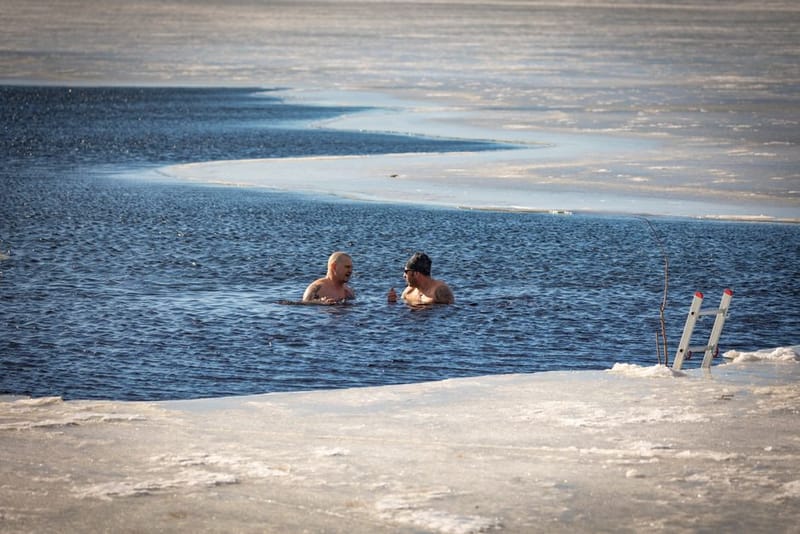
- Cold plunge added in is better for performance. Cold immersion can blunt some of the adaptation signals from sauna; the post-workout sauna protocol skips the cold for that specific goal. Reserve cold plunge for separate non-training-recovery sessions.
- Strength-sport outcomes are settled. The neuromuscular and hypertrophy papers are early. Keep expectations measured.
- Sauna replaces well-designed training. Sauna is a 1.9 percent time-trial improvement on top of training. It is not a substitute for the underlying training base.
Frequently asked questions
How quickly does post-exercise sauna produce performance benefit?
Should I sauna before or after a workout?
Can I add a cold plunge after the post-workout sauna?
What temperature should the sauna be?
Does sauna help with delayed-onset muscle soreness (DOMS)?
Is post-workout sauna safe for older athletes or anyone with cardiovascular conditions?

Sauna cardiovascular health

Sauna for mental health
Sauna and cold plunge protocol
How long should you sauna?
Sauna safety: who shouldn't sauna