Sauna Thermometers & Hygrometers: Buyer's Guide
A sauna thermometer reads temperature, a hygrometer reads humidity - together they show how hot it really feels. What to look for and where to mount them.
Do you need a thermometer in a sauna?
You do not strictly need one, but it makes a real difference to a good session. A thermometer lets you heat the room to a temperature you know suits you rather than guessing, which matters because comfort and safety both depend on getting the heat right. It also helps you learn your sauna, so you can repeat a session you enjoyed instead of relying on feel alone.
For a home sauna especially, a simple wall gauge is one of the most useful and inexpensive additions you can make. It turns vague trial and error into something you can actually dial in.
What is the difference between a thermometer and a hygrometer?
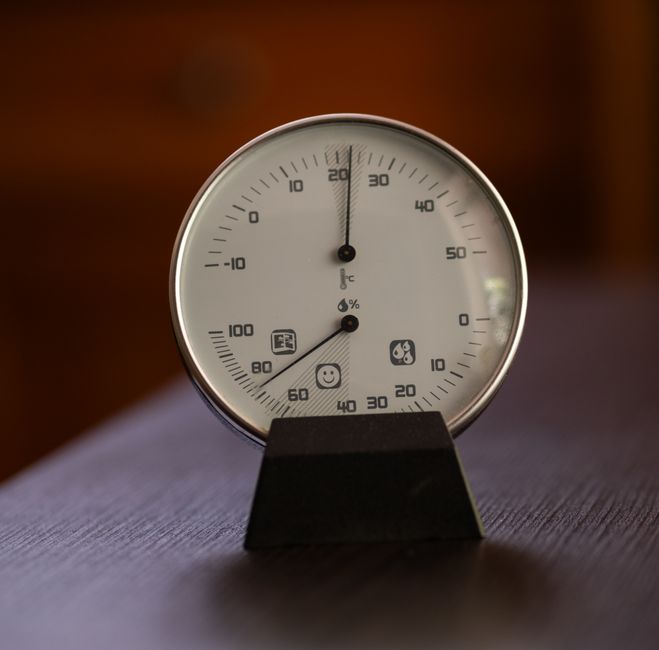
A thermometer measures air temperature, usually shown on a dial marked up to around 120 degrees Celsius. A hygrometer measures relative humidity, the amount of moisture in the air, shown as a percentage. In a sauna the two are often combined into a single round gauge with two needles, which is the neatest way to see both at a glance.
They answer different questions. The thermometer tells you how hot the air is; the hygrometer tells you how much steam is in it. You need both to understand what your sauna is actually doing.
Should you measure humidity as well as temperature?
It is well worth it, because humidity is what makes a given temperature feel mild or intense. A dry Finnish sauna at 90 degrees can feel comfortable, while the same temperature with a few ladles of water on the stones suddenly feels far hotter as the humidity climbs. Watching the hygrometer helps you build the loyly to a level you enjoy rather than overdoing it.
Traditional Finnish saunas run hot and fairly dry, with humidity often in the low tens of percent, then spike briefly when water hits the stones. Seeing that on a gauge takes the guesswork out of getting the balance right.
Analog or digital: which is better for a sauna?
Analog dial gauges are the traditional choice for good reason. They need no batteries, cope happily with high heat, are inexpensive and never fail at an awkward moment. The trade-off is that they are a little less precise and can be harder to read from across a dim room.
Digital units are more precise and easier to read, but the electronics must be rated for sauna heat; many everyday digital sensors are not, and will drift or die above 50 to 60 degrees. If you want digital, look for a sauna-specific model, or one with a heat-proof probe inside and the display mounted outside the hot room.
Where should you mount a sauna thermometer?
Placement changes the reading, so it matters. Mount the gauge on the wall at roughly head height when seated on the upper bench, which is where you actually feel the heat. Keep it away from the direct radiant heat of the heater, which would read falsely high, and away from the door, where draughts read falsely low.
Give a new gauge a few minutes to settle after the sauna warms up before trusting the number, and check it occasionally against how the room feels so you learn how your particular sauna behaves.